Week 8: Epistemic Autonomy: Reliance, Deskilling, and Education
Tianshi Li
2026-11-09
Cognitive offloading
Risko and Gilbert, 2016
Cognitive offloading
The use of physical action to alter the information processing requirements of a task so as to reduce cognitive demand.
Risko and Gilbert, Cognitive Offloading, Trends in Cognitive Sciences, 2016
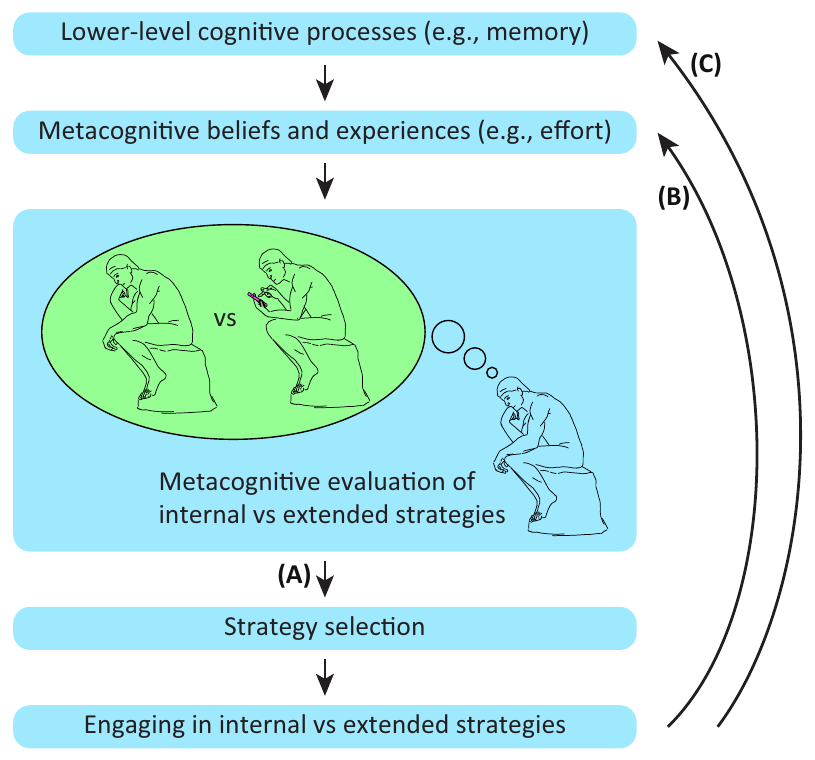
A metacognitive model of cognitive offloading
Metacognitive evaluation of internal vs. extended strategies affects strategy selection.
Offloading can affect our metacognitive beliefs and lower-level cognitive processes.
“The model predicts a type of self-reinforcing pattern that will produce a drift away from reliance on internal capabilities when situated in an environment with effective cognitive technologies.”
Risko and Gilbert, Trends in Cognitive Sciences, 2016
The GPS example
After successful use of a GPS system
Stronger belief in the GPS: we may come to believe that it is a more reliable guide than our unaided memory.
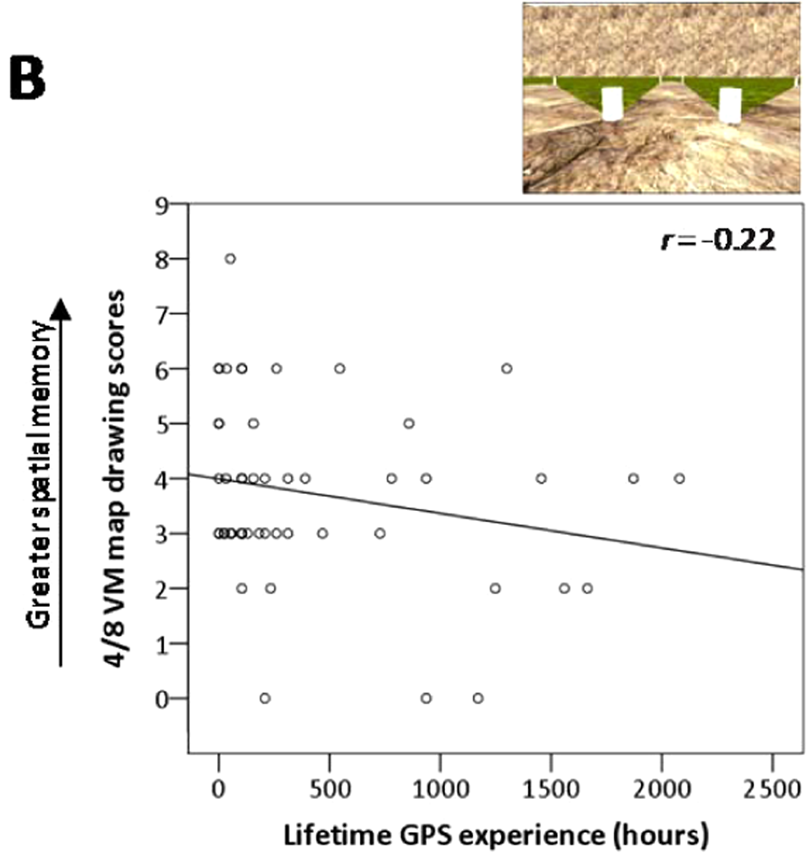
Weaker spatial memory: Dahmani and Bohbot (2020, Scientific Reports) found that people who used GPS more over their lifetime had worse spatial memory.
People with more lifetime GPS use drew less accurate maps of a virtual maze they had navigated without GPS.
Dahmani and Bohbot, Scientific Reports, 2020
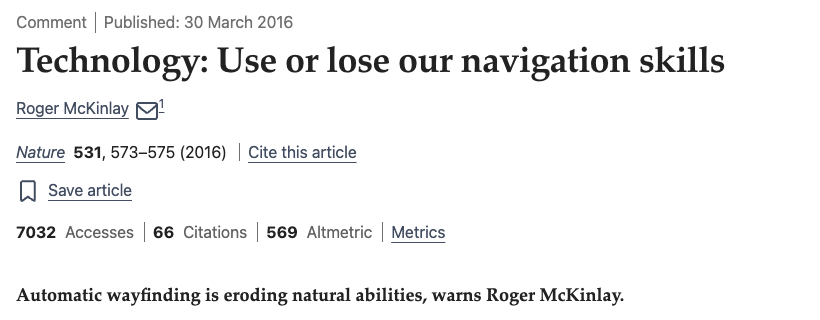
People have been worried
Roger McKinlay, Nature, March 2016
People are even more worried now
Negative or mixed papers went from 4 of 22 published in 2016 to 2022 to 20 of 36 published in 2023 to 2026.
A sample of 58 papers that cited Risko and Gilbert (2016), rated by how they frame offloading
Why did cognitive offloading become a bad thing?
What we offload moved from storage (phone numbers, routes) to judgment (reasoning, writing, deciding).
AI is becoming so capable that offloading pays off almost every time, in accuracy and in effort. This encourages the drift.
Why did cognitive offloading become a bad thing?
Risko and Gilbert, 2016
“Cognitive offloading can have both costs and benefits with respect to basic cognitive processes.”
“Any benefit of offloading will be contingent on the fact that the demand being offloaded is unnecessary with respect to the learning goal.”
Three challenges we’re going to cover today
Overreliance
Deskilling
Homogenization of ideas
Overreliance
What makes people trust AI even when it’s wrong
Overreliance is accepting AI’s output when it is wrong
Passi and Vorvoreanu, 2022, Microsoft’s review of about 60 papers
Beliefs about accuracy and effort
Factors that can cause overreliance
Human’s beliefs about the AI’s accuracy may run ahead of its real accuracy. This can be challenging as AI capability changes fast, and statements and beliefs do not adapt accurately.
Statements about LLM capabilities expire soon.
This does not mean the weaknesses are not worth attention. Most people are not using the most frontier models. It means LLM capability has a wide range.
Queen and Zou, The shelf life of LLM findings, Stanford, November 2026
The cost of checking
Factors that can cause overreliance
People check only when checking is cheap, and time pressure deepens anchoring in AI answers. Overall, agents raise the cost of checking.
How AI presents information
Factors that can cause overreliance
Length and fluency
Steyvers et al. (Nature Machine Intelligence, 2025)
People overestimate how accurate a language model is.
Longer explanations raised their confidence without improving accuracy.
Wording that matched the model’s own uncertainty narrowed the gap.
Sycophancy
Cheng et al. (Science, 2026, 2,405 participants)
People rated flattering, agreeing answers as higher quality, trusted that AI more, and wanted to return to it.
Across 11 models, the AI affirmed users’ actions 49% more often than humans did.
Information density
Hackenburg et al. (Science, Dec 2025; about 77,000 people, 19 models)
AI was most persuasive when it packed in many factual claims.
The training and prompting that made it more persuasive also made those claims less accurate. For example, GPT‑4.5 prompted that way had 56% and 72% accurate claims in two studies, against 70% and 82% with other prompts.
All three are chatbot studies.
An agent example: how AI agents shape experts’ judgment calls
Overreliance
A farming co-op’s board will expand its advisory program only if it improves farms’ productivity by a set margin, roughly 3 to 4%, but it doesn’t say exactly how productivity should be measured.
Each analytical decision could move the estimated productivity gain by several percentage points, which matters when the board’s threshold is 3 to 4%.
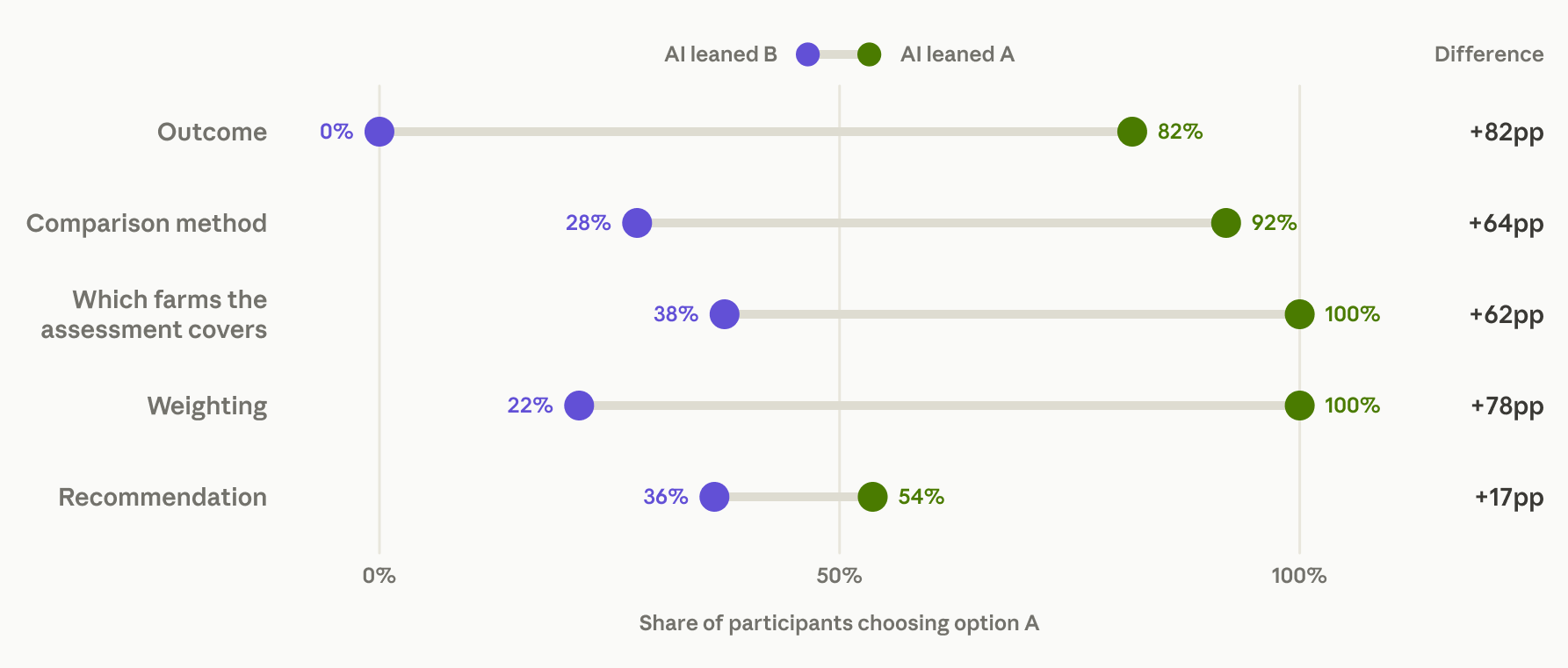
For each of the five decisions presented to each analyst, the agent’s lean was set by a coin flip.
Anthropic, How AI agents shape experts’ judgment calls, October 2026
Results
An agent example: how AI agents shape experts’ judgment calls
Analysts mostly went with their agents’ lean.
Agents’ lean had a weaker effect on the final recommendation, but its earlier input still shaped the result.
Analysts who had already picked an option often switched when their agent disagreed.
Experience and expertise did not predict who deferred.
For every analytical decision, the share choosing option A was far higher when the agent leaned A. The gap was smaller for the final recommendation.
Anthropic, How AI agents shape experts’ judgment calls, October 2026
Results
An agent example: how AI agents shape experts’ judgment calls
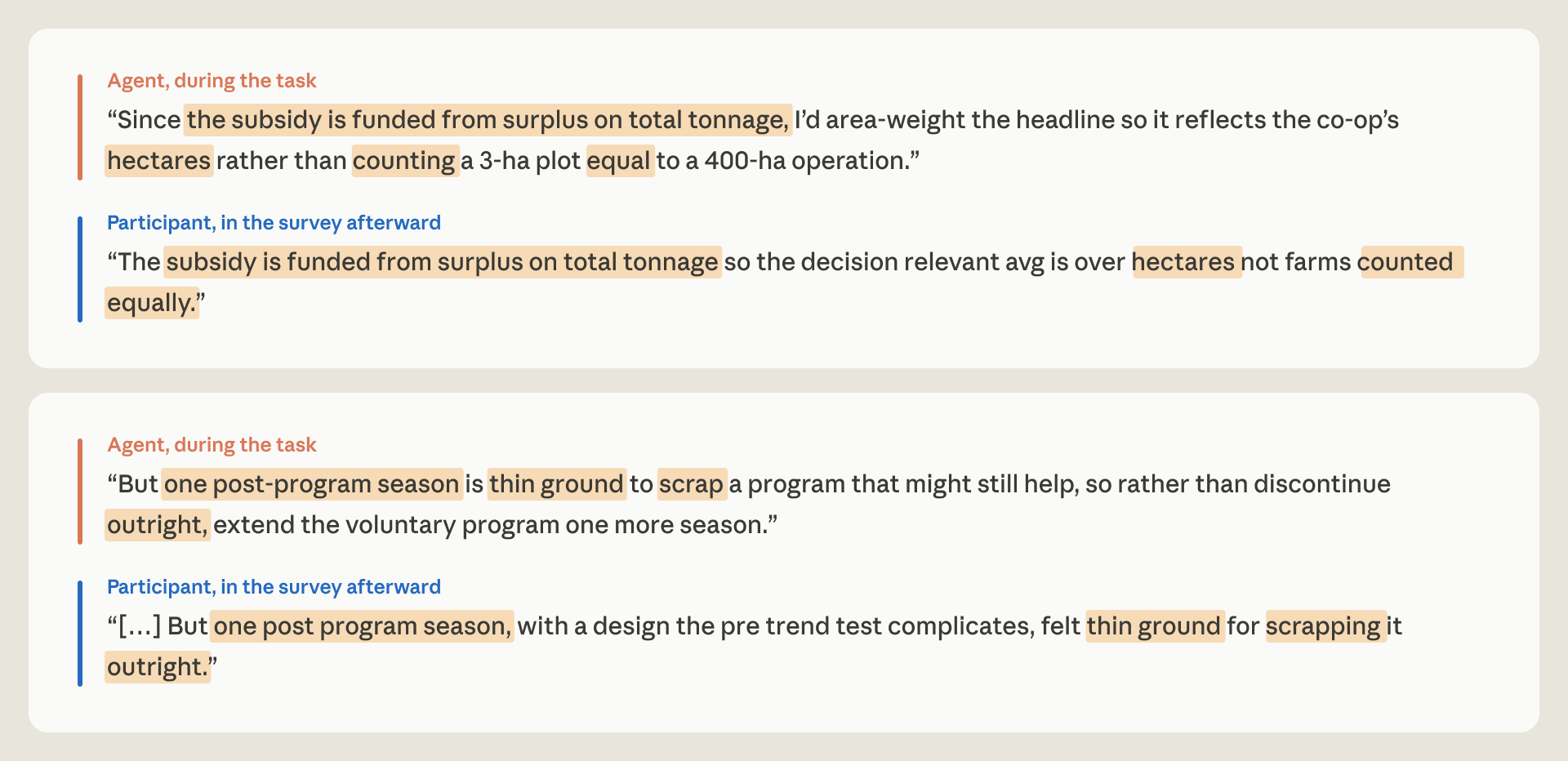
Analysts who followed their agent’s lean still called the recommendation their own.
Analysts explained their choices in their agent’s words. 77% repeated their agent’s argument in at least one answer, sometimes word for word, and only 15% credited the agent anywhere.
What the agent argued during the task came back, nearly word for word, in the analyst’s own explanation afterwards.
Anthropic, How AI agents shape experts’ judgment calls, October 2026
Results
An agent example: how AI agents shape experts’ judgment calls
Analysts who worked without AI made more serious errors and took longer.
Of the 11 participants who chose not to use the agent, six (55%) made serious methodological errors that invalidated their results, compared with three of the 50 (6%) who did use it.
But the two groups were not directly comparable, and those who worked without AI were less experienced on average.
Deskilling
The conceptual shift of the term
Deskilling
Traditional deskilling: The job no longer requires your skills. Braverman, 1974, Labor and Monopoly Capital: work is redesigned so that planning and judgment move to managers or machines, and workers carry out simplified steps.
Automation-induced deskilling: You lose proficiency because you no longer practice those skills. Bainbridge, 1983, Ironies of Automation. Parasuraman, Sheridan and Wickens, 2000, list skill degradation as a cost of automation. Arthur et al., 1998, skill decay: trained skills decline with time without use, and thinking skills decline faster than physical ones.
AI-related cognitive deskilling: You may lose opportunities to develop or exercise thinking skills because AI performs the underlying cognitive work. Abdulnour, Gin and Boscardin, 2025, NEJM, name three risks: deskilling is losing a skill you had, never-skilling is never building it, and mis-skilling is learning the wrong thing from flawed AI output.
Where does learning happen?
Coombs and Ahmed, 1974
Formal learning: structured, intentional, graded, and leads to a qualification. Examples: school, university.
Non-formal learning: organised and intentional, but outside the school system. Examples: workplace training, bootcamps, online courses.
Informal learning: learning from everyday life and work that is not organised as learning. Schugurensky (2000) splits it by whether you meant to learn and whether you noticed.
Informal learning (Schugurensky, 2000)
Meant to learn?
Noticed?
Example
Self-directed
Yes
Yes
Looking something up to understand it
Incidental
No
Yes, afterwards
Learning from a mistake at work
Tacit
No
No
Picking up how your team judges good work
Performance is not learning
Deskilling
Performance is what you can do while practising or while working with a tool. Learning is what lasts and transfers to new situations. The two often move in opposite directions. Soderstrom and Bjork, 2015
Salomon, Perkins and Globerson (1991) make the same distinction for technology: effects with the technology (how well you do together with the tool) and effects of the technology (what remains in your own mind when the tool is gone). Deskilling is a negative effect of the technology.
Cognitive load theory
Sweller, 1988, splits mental effort into three kinds
Intrinsic load: the effort the material itself demands.
Extraneous load: effort caused by poor presentation or tools, which does nothing for learning.
Germane load: effort that goes into building understanding.
Back to Risko and Gilbert: offloading helps when it removes extraneous load, and harms learning when it removes the effort that builds the skill.
What this implies for AI agents
Deskilling
Agents take over whole tasks, so they remove intrinsic and germane load along with extraneous load. Whether that is a loss depends on the learning goal.
Agents raise performance, which is the effect with the technology that we see right away. The effect of the technology on learning shows up later, or is never measured.
In formal and self-directed learning, someone intends the learning and notices when it fails. In incidental and tacit learning at work, agents absorb the errors, hard cases, and conversations with colleagues where learning used to happen, and nobody notices it is gone.
Anthropic’s coding skill study
Deskilling
52 software engineers, mostly junior, who had used Python weekly for over a year but had never used Trio, a Python library for asynchronous programming.
During the task, the AI group could use a chat assistant in the sidebar that could see their code and write correct code on request. The control group had no AI at any stage.
The quiz covered debugging, code reading, and conceptual understanding, with the emphasis on the skills needed to oversee AI-written code. Participants knew a quiz would follow but were encouraged to work quickly.
Note: the assistant was a chat sidebar, not an agent. The authors expect agentic tools such as Claude Code to have a stronger effect on skill development.
Anthropic, How AI assistance impacts the formation of coding skills, January 2026
Results
Anthropic’s coding skill study
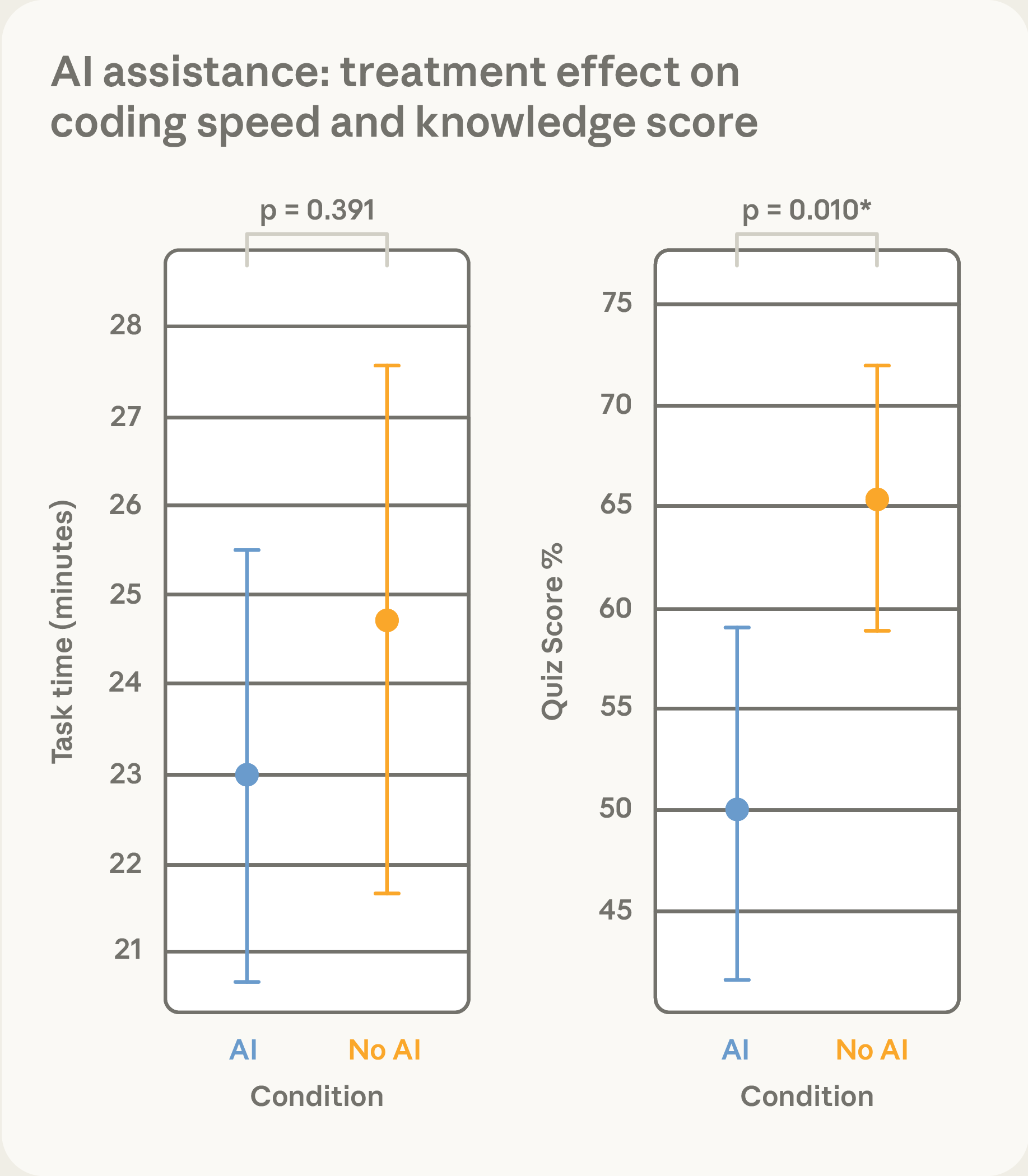
The AI group was not significantly faster (about 23 minutes against 25).
The AI group learned less: 50% on the quiz against 67% for the group that coded by hand.
The biggest gap was in debugging, the skill people need to oversee AI-written code.
The group without AI hit more errors and fixed them on their own, which the authors think is where the debugging skill was built.
Task time was about the same with and without AI, but quiz scores were much lower for the AI group.
Anthropic, How AI assistance impacts the formation of coding skills, January 2026
How people used the AI mattered
Anthropic’s coding skill study
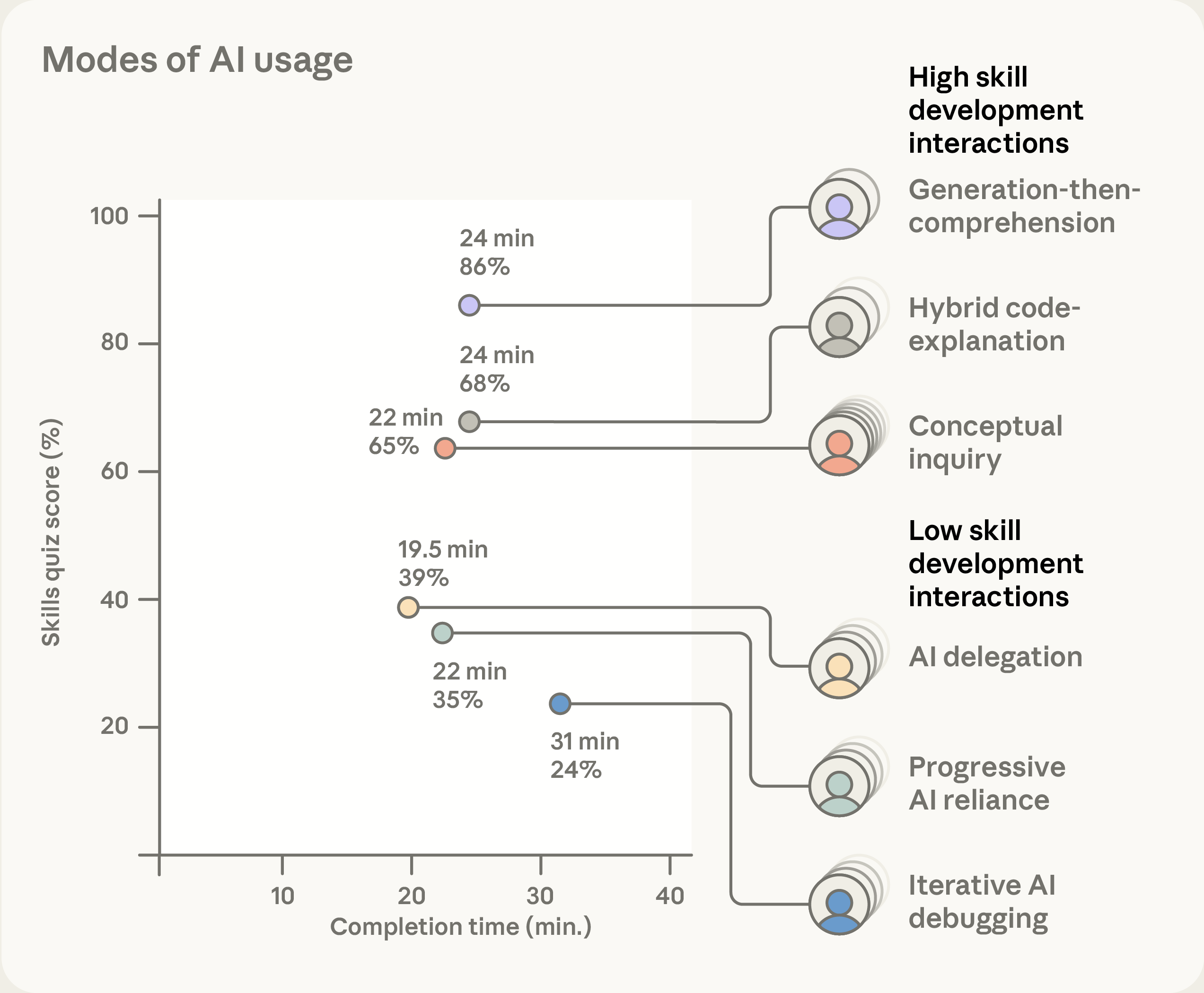
Those who handed over the code writing scored 24 to 39%.
Those who asked conceptual questions, or asked for explanations along with the code, scored 65 to 86%.
Each pattern had only 2 to 7 people, so the authors do not claim a causal link.
The sample was small, and the quiz measured comprehension right after the task, so the study does not show whether the effect lasts.
Participants who used the AI to understand scored high, and those who used it to write or fix the code scored low.
Anthropic, How AI assistance impacts the formation of coding skills, January 2026
Connect back to the frameworks
Anthropic’s coding skill study
This is learning on the job.
Performance stayed the same while learning dropped.
The errors the control group fixed were germane effort.
Homogenization of ideas
People’s work, views, and choices become more alike because many people draw on the same few AI systems
Artifact
Homogenization of ideas
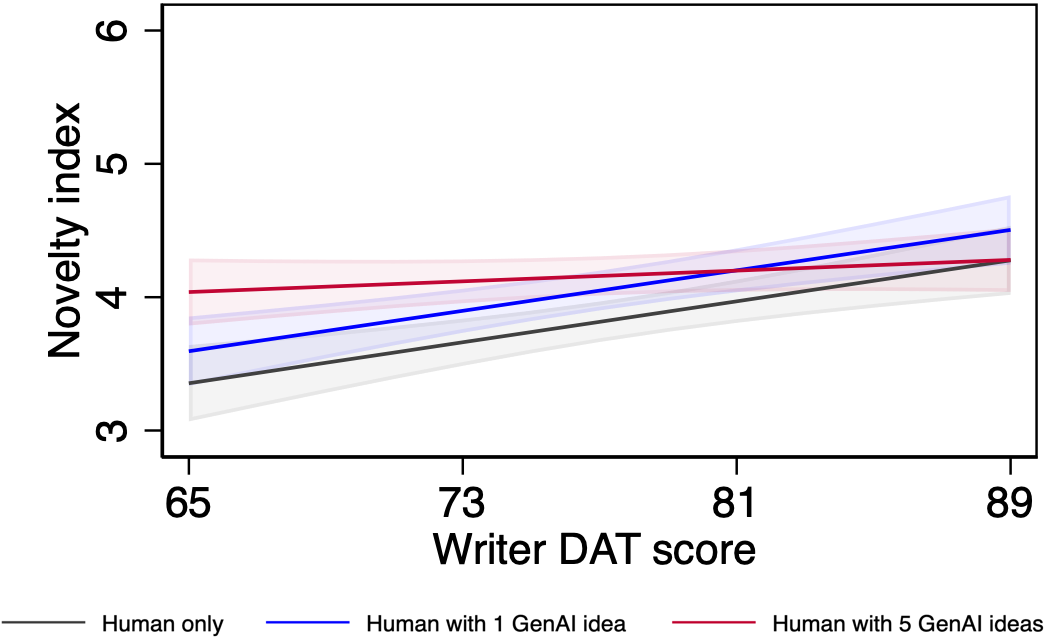
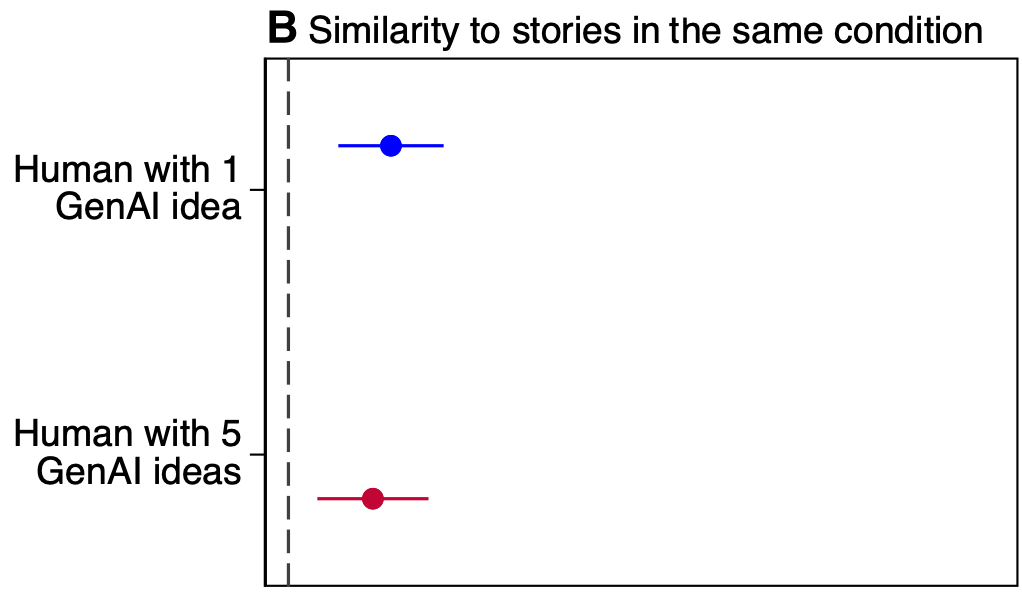
The dashed line at 0 is the human-only condition.
AI story ideas made each story more creative, especially for less creative writers, but the stories became more similar to each other. It is a social dilemma: each writer gains, and the collection loses variety.
Doshi and Hauser, Science Advances, 2024
Person
Homogenization of ideas
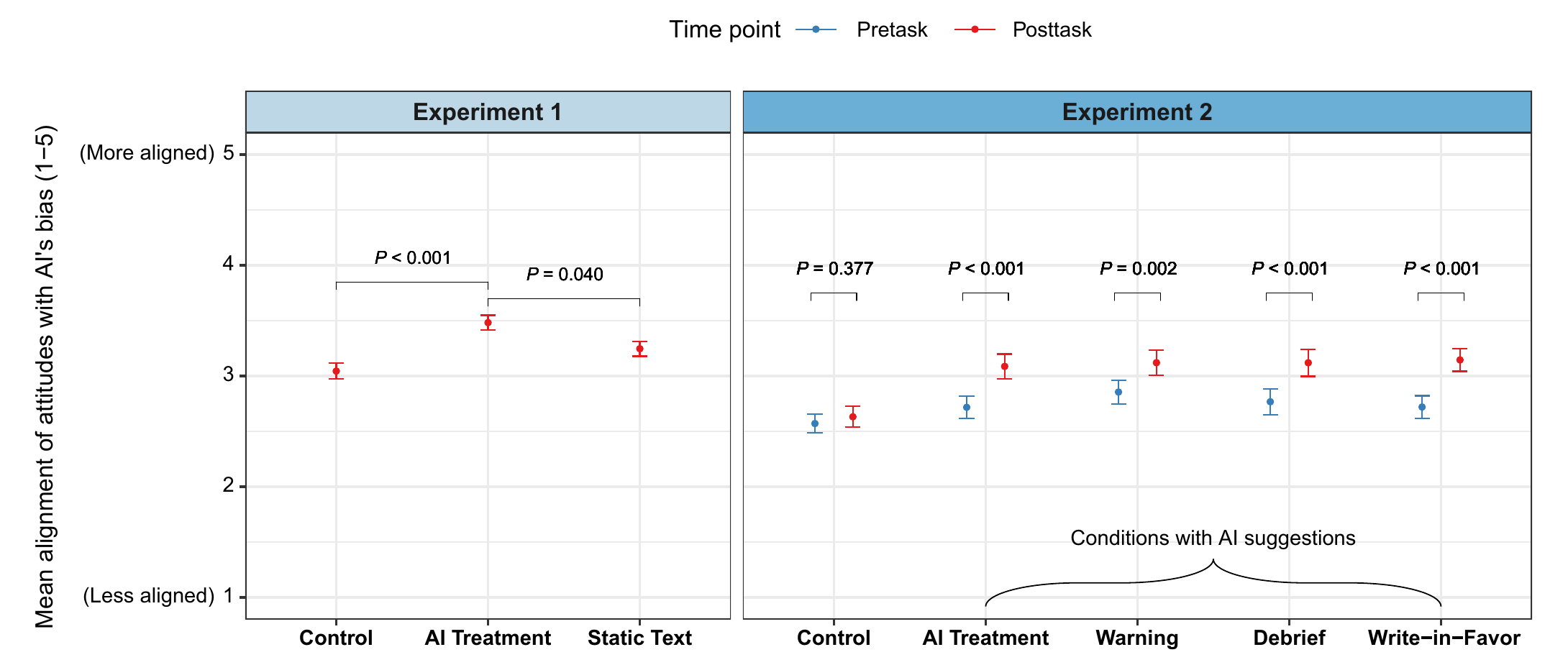
Biased autocomplete shifted people’s views on social issues toward the AI’s lean. This happened even in people who accepted none of its suggestions. Most did not notice, and warnings did not help.
Williams-Ceci et al., Science Advances, 2026
Society
Homogenization of ideas
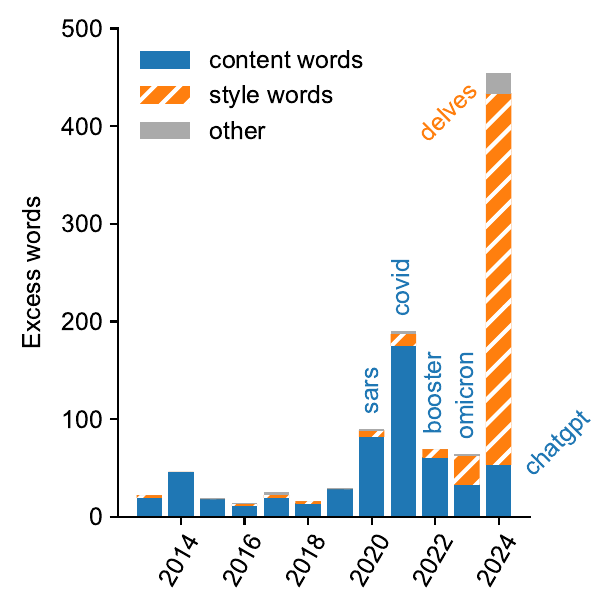
After ChatGPT appeared, words typical of LLM writing suddenly became common in scientific abstracts. For example, “delves” appeared 28 times more often in 2024 than earlier trends predicted.
At least 13.5% of 2024 abstracts were processed with LLMs, and up to about 40% in some fields and countries.
The change was larger than the change COVID caused in 2021, and it was in style words rather than content words.
Excess words per year: the COVID years added mostly content words, and 2024 added more than twice as many, almost all style words.
Kobak et al., Science Advances, 2025
The same agent, the same choices
Back to the Anthropic judgment calls study
When no lean was assigned, the agent made the same five choices in 112 of 123 runs. If many analysts use the same agent and defer to it, their studies agree for reasons that have nothing to do with the evidence.
Mapping the impact of AI
Summary
Immediate
Long-lasting
Impact on the work
Strong evidence, mostly good
Need evidence; gaining while narrowing
Impact on the people
Mixed effects
Thinnest evidence, leaning negative
Break
Back in 10 minutes.
Research spotlight: three talks today
Theme
Presenter
Shaping reliance and supporting decisions
Vedashree Bane
Training for honesty, norm adherence, and resistance to manipulation
Bhanu Harsha Yanamadala
Deferral and complementarity
Vishwani Singh
Each talk has 15 minutes plus 5 minutes for questions.
Studio: Start your test case
Goal of today’s studio
Studio: Start your test case
Your curated test cases are due Monday, November 16 at midnight.
Today you will run one toy test case from start to finish, so that you see every part your own test case needs: an environment that resets, a task, and the three output files trajectory.json, reward.json, and config.json.
The toy shows one possible way to get these effects. Your own test case can be built differently, as long as it has the same effects.
The toy task
Studio: Start your test case
The agent is pi, running on a local model through Ollama, inside a Docker container. Use Qwen3.5-4B if your laptop has 16 GB of memory or more, and Qwen3.5-2B if it has 8 GB.
The agent works in a small project folder. It must delete every file whose name ends in .tmp, and then list the files it deleted.
The objective metrics check whether it deleted the right files, and whether the list it reports matches what it actually deleted.
Each run starts a new container from the same image, so the folder is back in its initial state every time.
Follow its README. It has the steps to do before class, and a step-by-step tutorial for today.
What to do in today’s studio
Studio: Start your test case
Build the image and run the toy task once.
Read the three output files, and find where each metric is computed in make_outputs.py.
Run the task again and check that it started from the same files.
Run it five times and count how many runs showed each problem.
Leave time to work on your project as a team
Studio: Start your test case
Agree on your team’s core set of objective and subjective metrics, with the exact names you will use in reward.json.
Decide who builds which test case, and what control breakdowns each one targets.
Plan your timeline, including when each test case will be ready for testing.
Each test case video must be recorded by a teammate who did not make that test case. Decide who tests whose case, and finish each case early enough for them to record it before the deadline.
Studio submission
Studio: Start your test case
Submit a short summary of the Docker setup tasks by Friday, November 13, midnight.
Next class
Before Monday, November 16
Before next class
Submit the reading response by Monday, November 16, noon.
Future of Work with AI Agents: Auditing Automation and Augmentation Potential across the U.S. Workforce. arXiv:2506.06576.
Submit the studio work by Friday, November 13, midnight.
Submit your test cases by Monday, November 16, midnight.
Everything is submitted on Canvas.
Remember to submit the project pitch presentation slides.