AI Agents and Human Control
Week 9: Workforce Automation
2026-11-16
O*NET (Occupational Information Network)
- A database of about 1,000 occupations sponsored by the U.S. Department of Labor.
- Each occupation is described by what the worker brings and what the job requires.
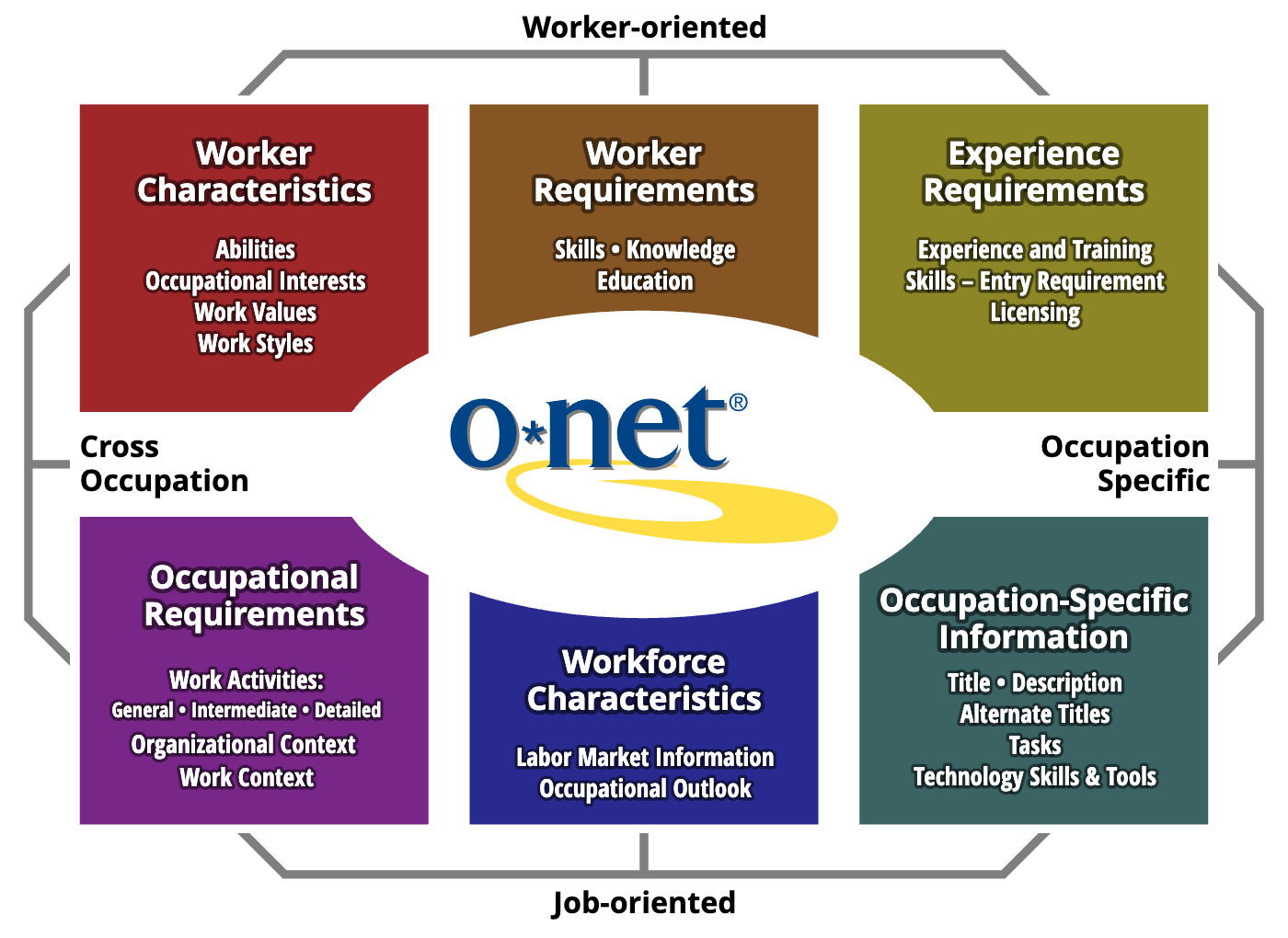
O*NET Content Model, O*NET Resource Center
An example: Customer Service Representatives
O*NET’s taxonomy structure
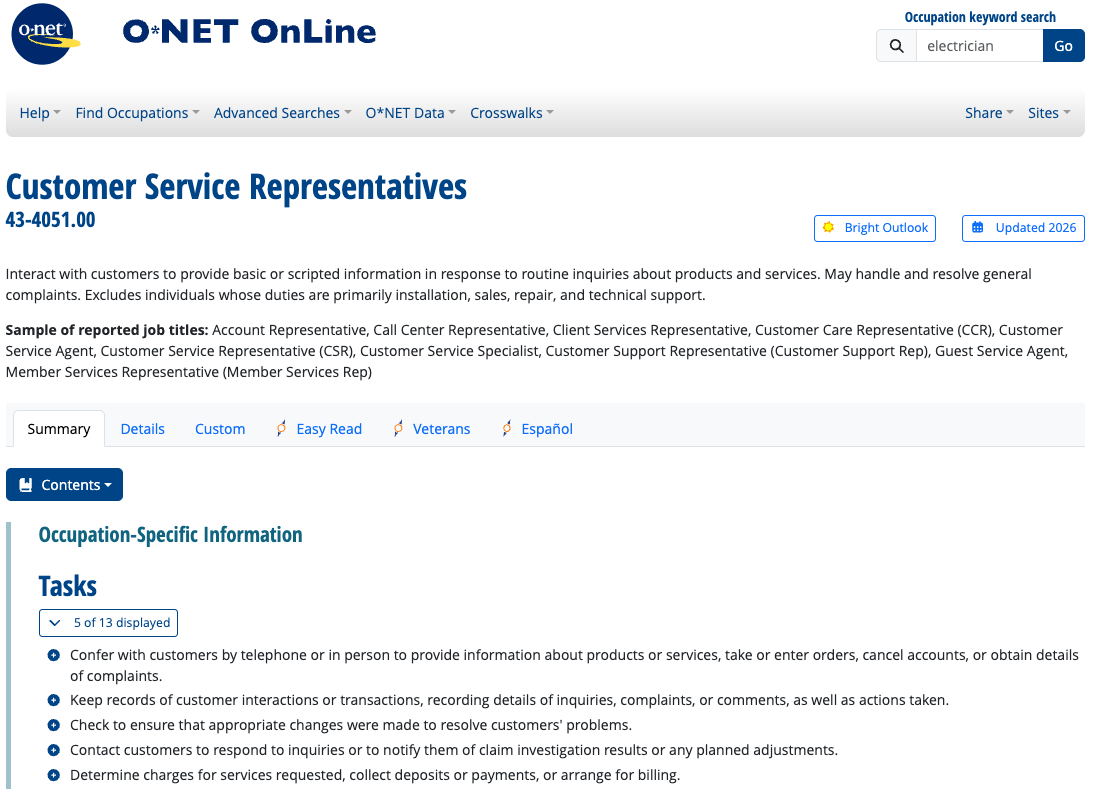
The same page also lists the occupation's skills, abilities, knowledge, work context, and wages.
The OpenAI exposure study: three measures
Eloundou, Manning, Mishkin and Rock, March 2023
- \(\alpha = E_1\), a lower bound.
- \(\beta = E_1 + 0.5\,E_2\), the main measure. The half weight reflects the extra investment that tools built on the LLM need.
- \(\zeta = E_1 + E_2\), an upper bound.
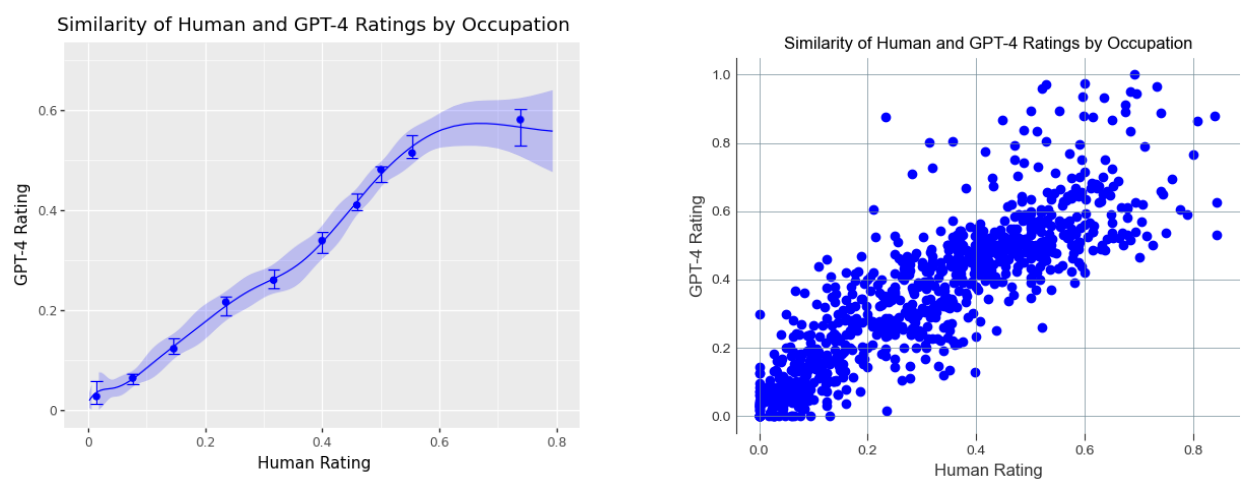
GPT-4’s ratings of occupation-level exposure track the human ratings closely, though GPT-4 rates lower at the top.
Eloundou et al., GPTs are GPTs, 2023
The OpenAI exposure study: findings
Eloundou, Manning, Mishkin and Rock, March 2023
- About 80% of U.S. workers could have at least 10% of their tasks affected by LLMs, and about 19% could have at least half of their tasks affected.
- With an LLM alone, about 15% of all worker tasks could be done significantly faster at the same quality. With software built on LLMs, the share rises to between 47% and 56%.
- With language and code capabilities alone, only 3% of workers have more than half of their tasks exposed.
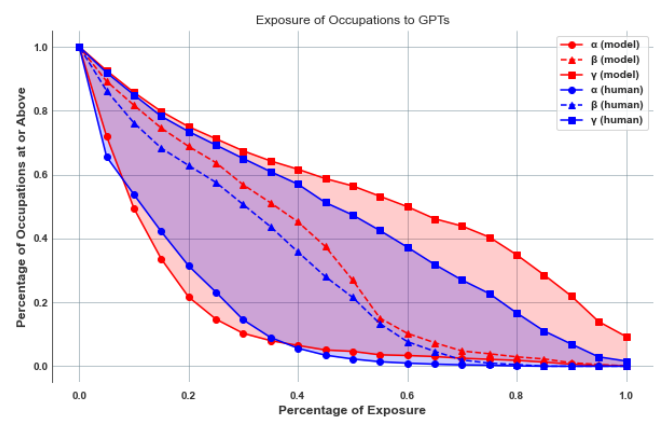
The share of occupations with at least a given share of exposed tasks, for each measure.
Eloundou et al., GPTs are GPTs, 2023
The OpenAI exposure study: findings
Eloundou, Manning, Mishkin and Rock, March 2023
- Higher-wage occupations are generally more exposed.
- Programming and writing skills go with higher exposure. Science and critical thinking skills go with lower exposure.
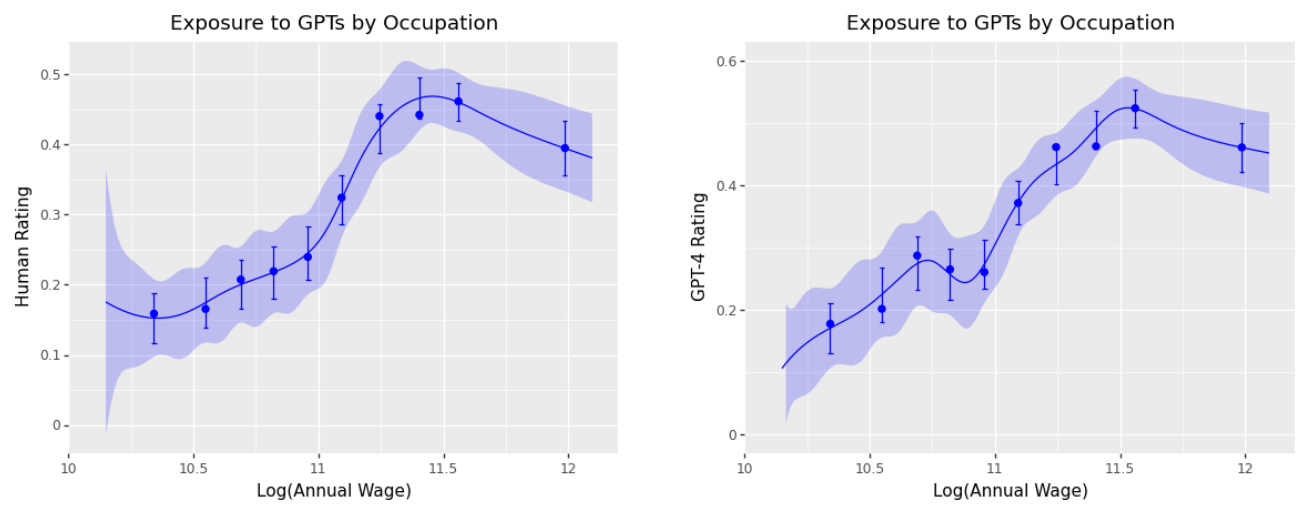
Exposure rises with annual wage and dips slightly at the very top, in both human (left) and GPT-4 (right) ratings.
Eloundou et al., GPTs are GPTs, 2023
V1: how the index is measured
Anthropic Economic Index, February 2025
- About one million Claude.ai Free and Pro conversations from December 2024 and January 2025.
- Clio, a privacy-preserving tool, matches each conversation to the O*NET task that best represents the AI’s role. Researchers see only the aggregated tasks and occupations.
- The match walks down a tree of tasks: 12 top-level tasks, 474 middle-level tasks, and 19,530 O*NET tasks.
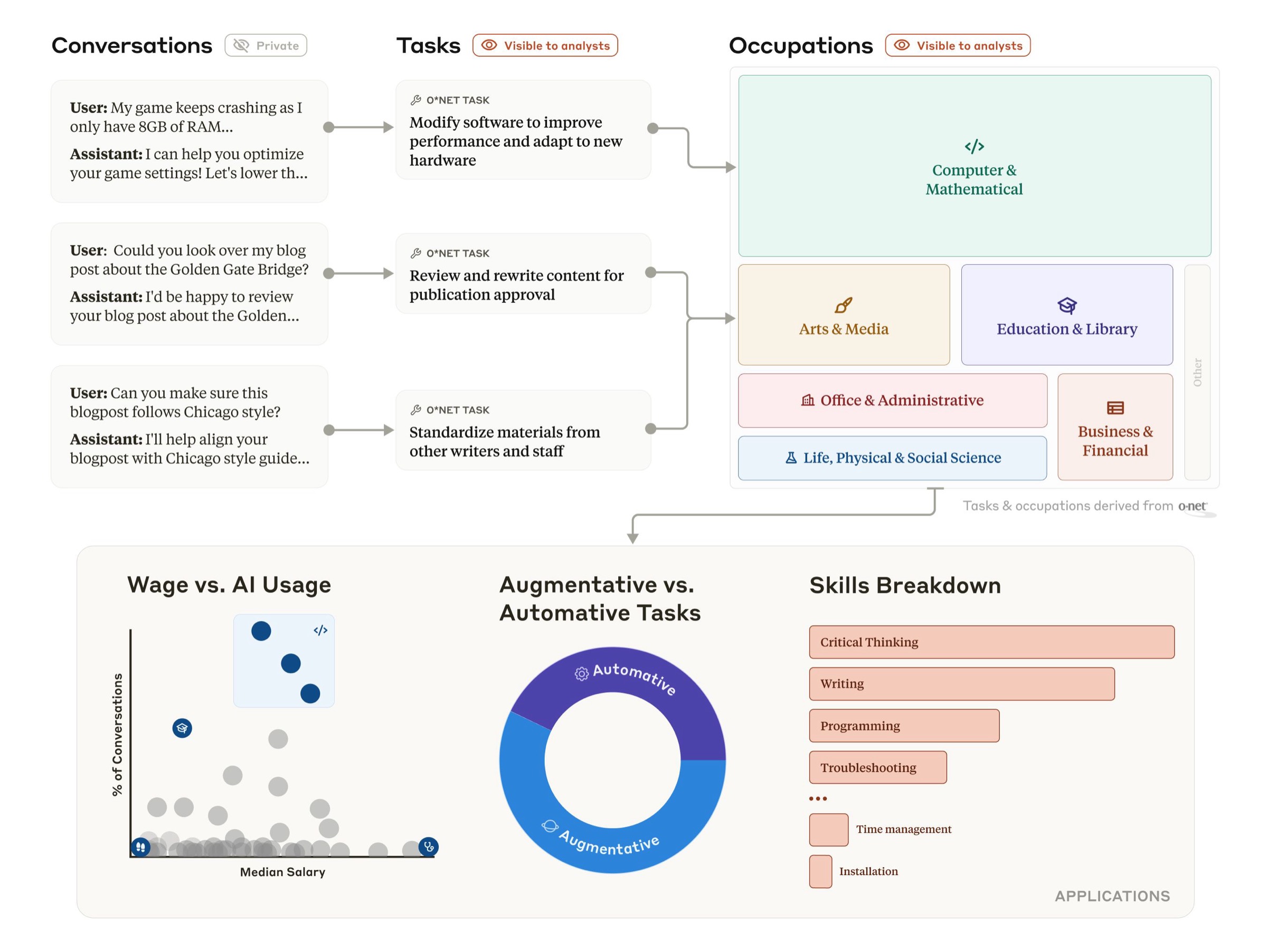
Private conversations are mapped to O*NET tasks, and only tasks and occupations are visible to analysts.
Anthropic Economic Index, February 2025
V1: which tasks people use AI for
Anthropic Economic Index, February 2025
- Usage is concentrated in software development and technical writing.
- Computer and mathematical tasks are 37.2% of Claude conversations, but these occupations are 3.4% of U.S. workers.
- About 36% of occupations see AI use in at least a quarter of their tasks. About 4% see it in three quarters of their tasks.
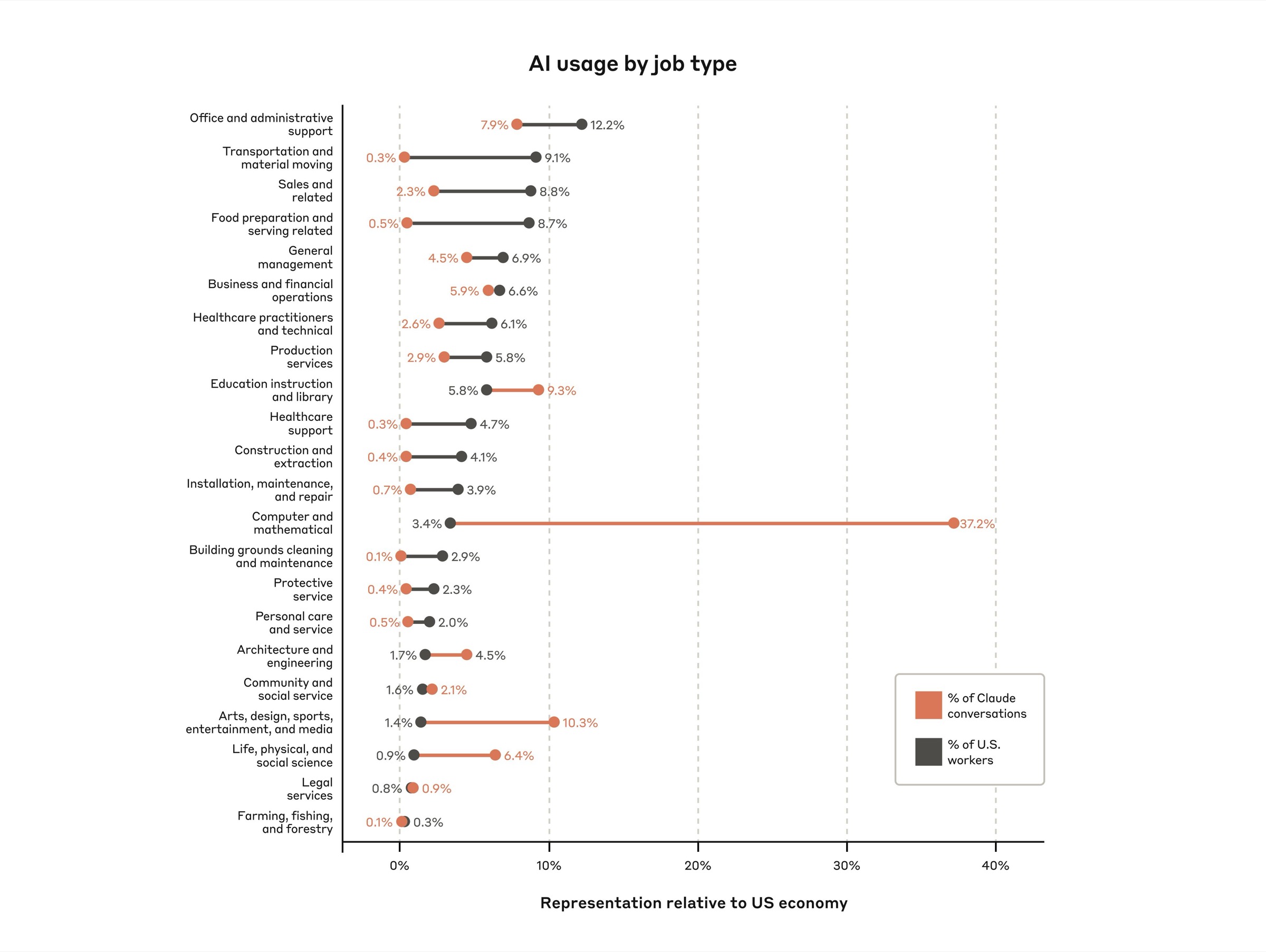
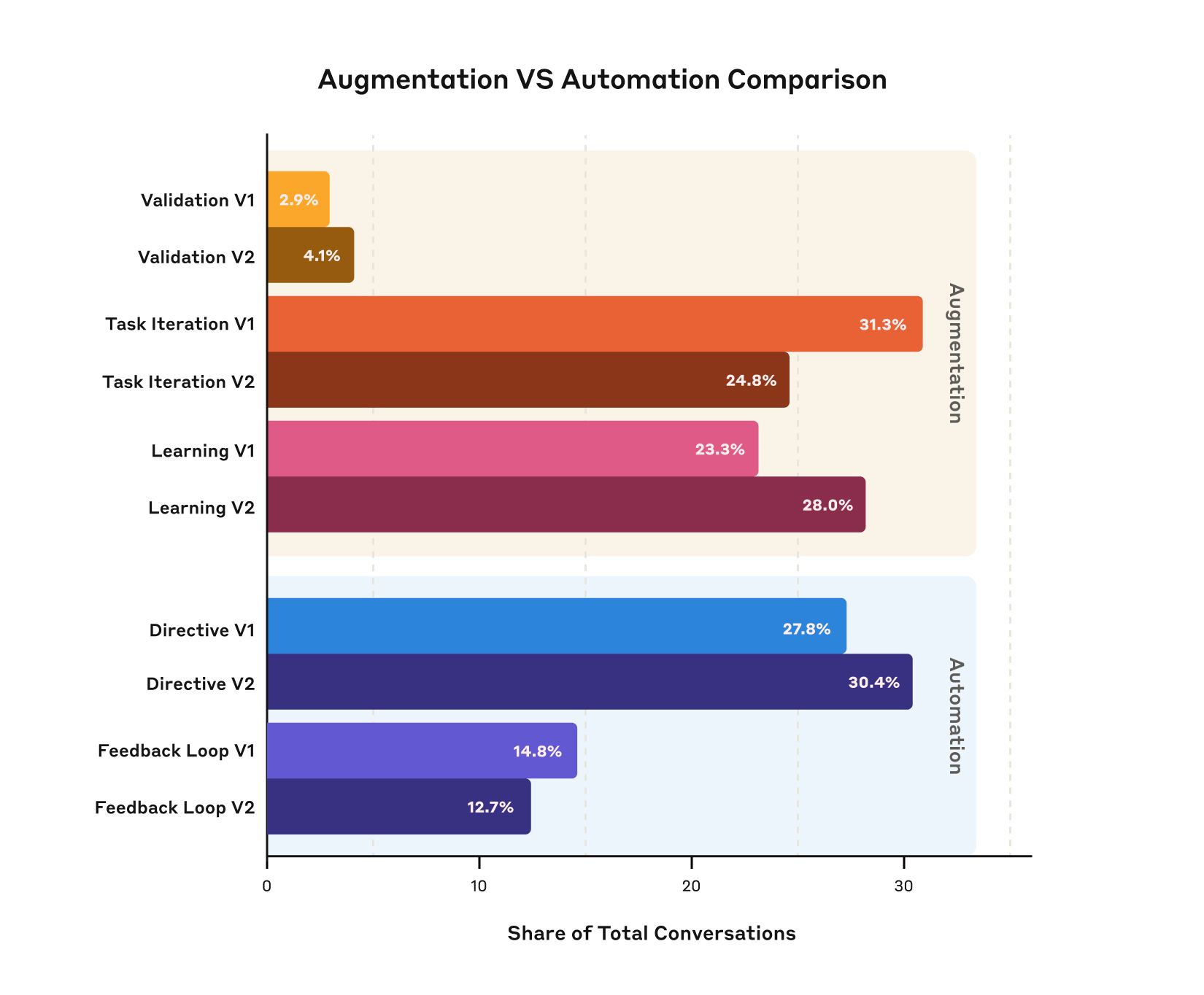
V1: augmentative or automative?
Anthropic Economic Index, February 2025
Automation
- Directive: complete task delegation with minimal interaction.
- Feedback loop: task completion guided by feedback from the environment.
Augmentation
- Task iteration: the human and the AI refine the work together.
- Learning: the human seeks understanding rather than a finished task.
- Validation: the human asks the AI to check their own work.
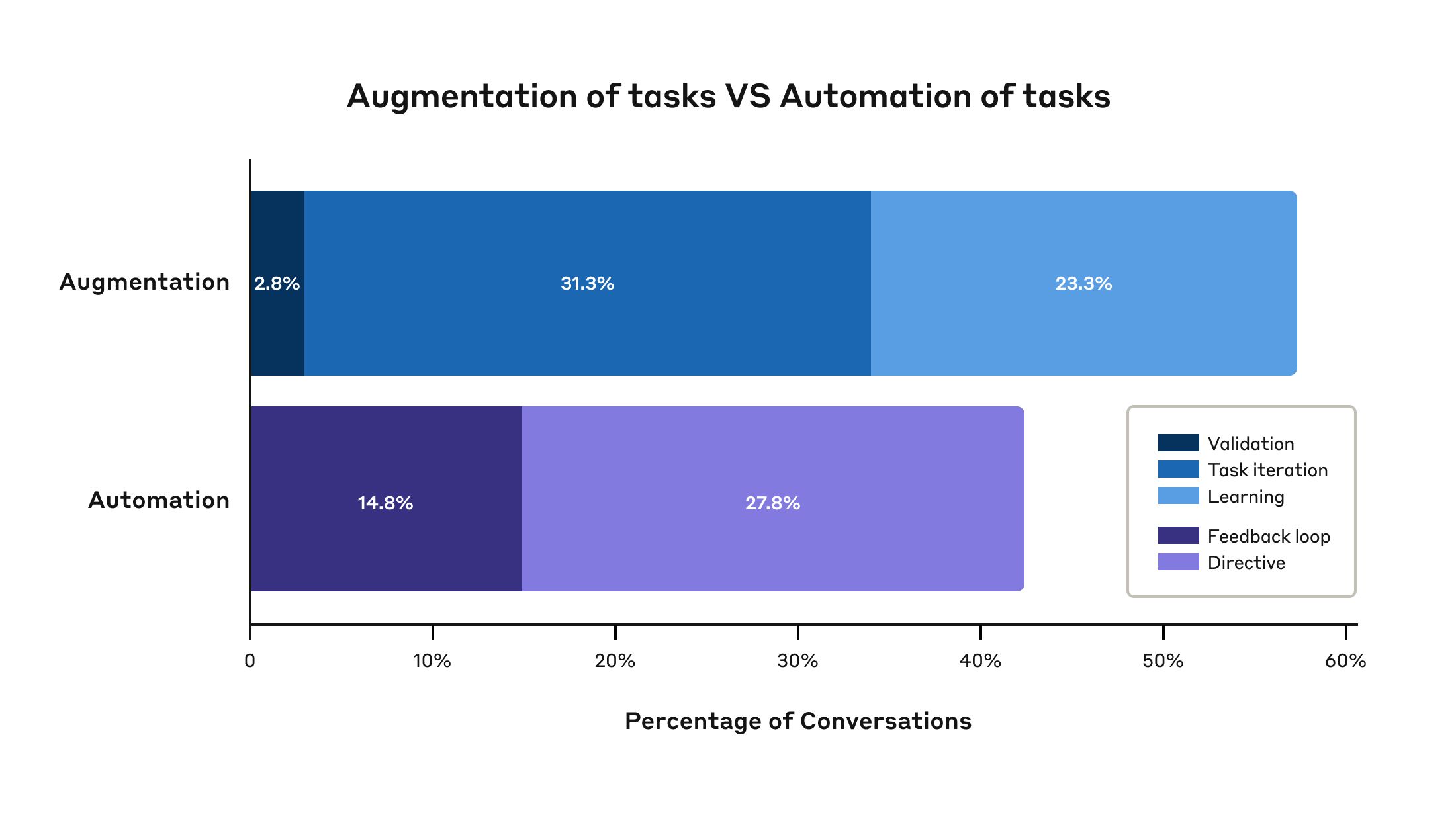
Augmentation made up 57% of classified conversations and automation 43%.
Anthropic Economic Index, February 2025
V2: as the model becomes more capable
Anthropic Economic Index, March 2025
- After Claude 3.7 Sonnet launched, the share of coding, education, science, and healthcare uses rose.
- The balance of augmentation and automation was essentially unchanged, with augmentation still at 57%.
- Learning conversations rose from about 23% to about 28%.
V3: across countries, regions, and business use
Anthropic Economic Index, September 2025
- Usage per person rises with income: a 1% increase in GDP per capita goes with a 0.7% increase in Claude usage per capita.
- Israel and Singapore lead in usage per person. India, Indonesia, and Nigeria use Claude less.
- In business use through the API, 77% of transcripts show automation patterns and 12% show augmentation.
- Directive conversations on Claude.ai rose from 27% to 39%.
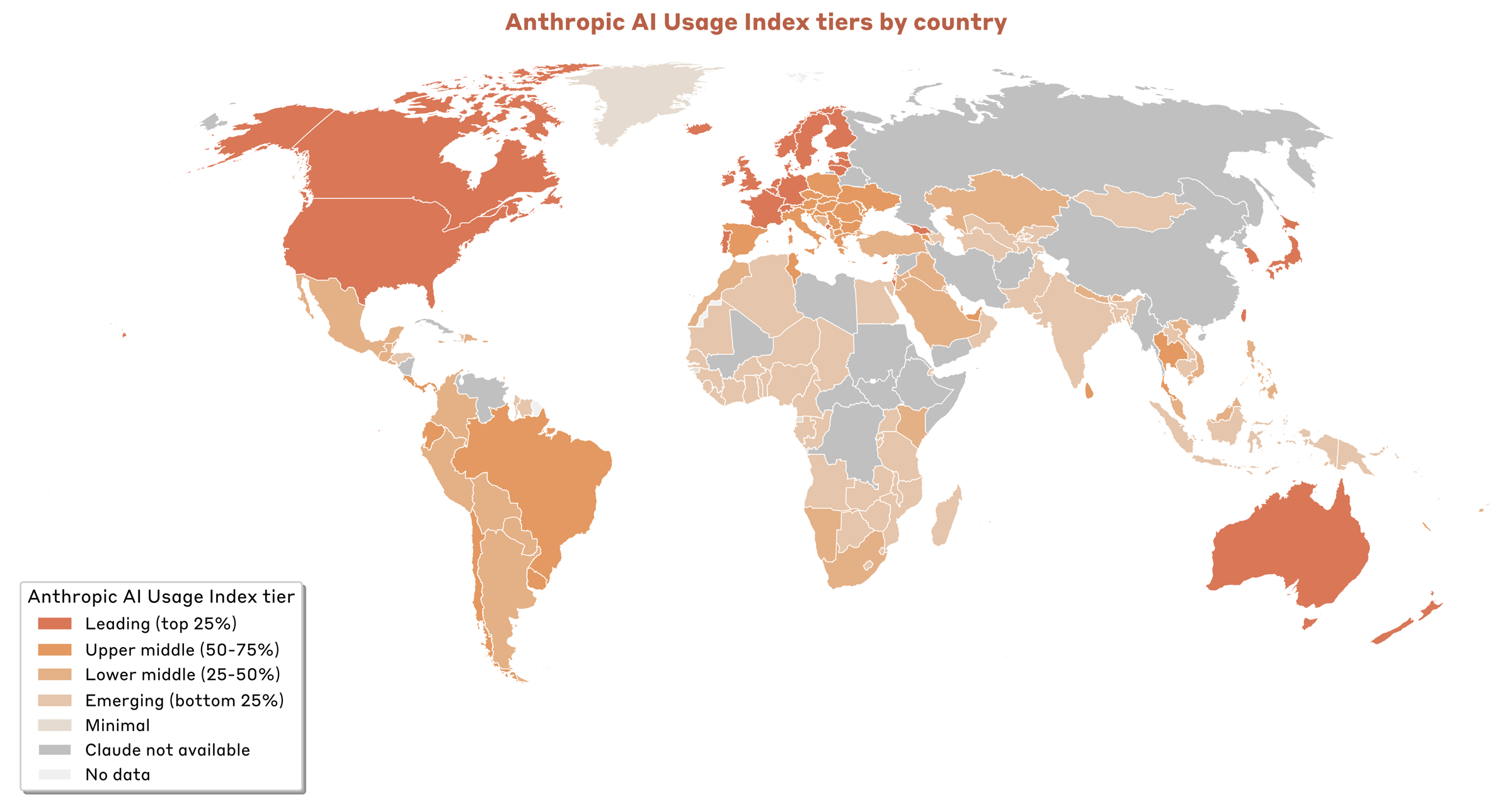
Countries by the Anthropic AI Usage Index, which compares a country’s share of Claude usage with its share of the working-age population.
Anthropic Economic Index, September 2025
V5: learning curves
Anthropic Economic Index, March 2026
- Data: conversations from Claude.ai and the developer API, including Claude Code, sampled from February 5 to 12, 2026.
- Users with six months or more on Claude attempt higher-value tasks and succeed more often. Their success rate is about 4 to 5 percentage points higher, even after controlling for the task.
- Experienced users iterate with Claude more and delegate whole tasks less.
- This could be learning by doing, or it could reflect who adopted early.
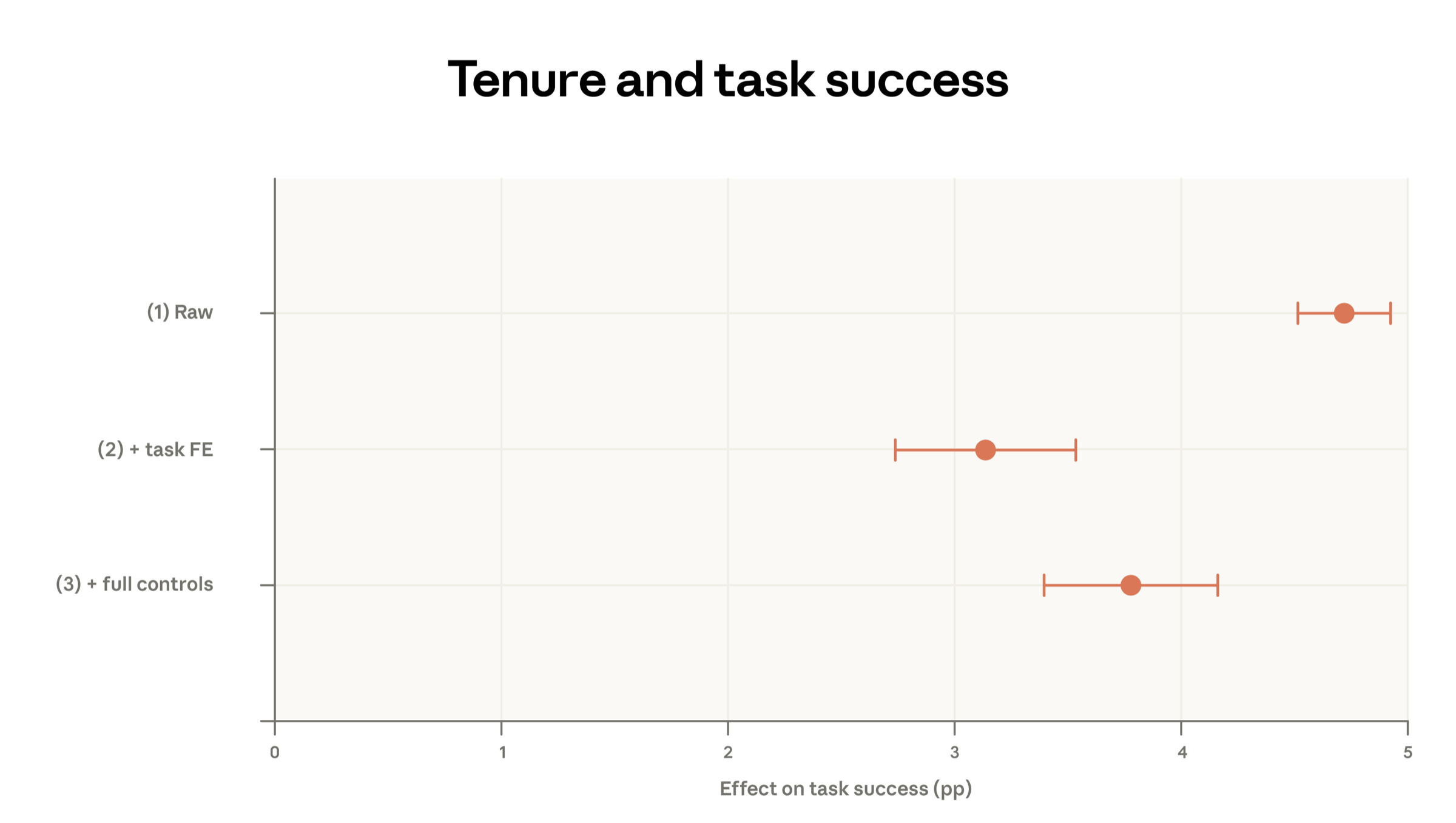
Long-tenure users’ higher success rate shrinks but remains when the task and other factors are controlled for.
Anthropic Economic Index, March 2026
V6: cadences
Anthropic Economic Index, June 2026
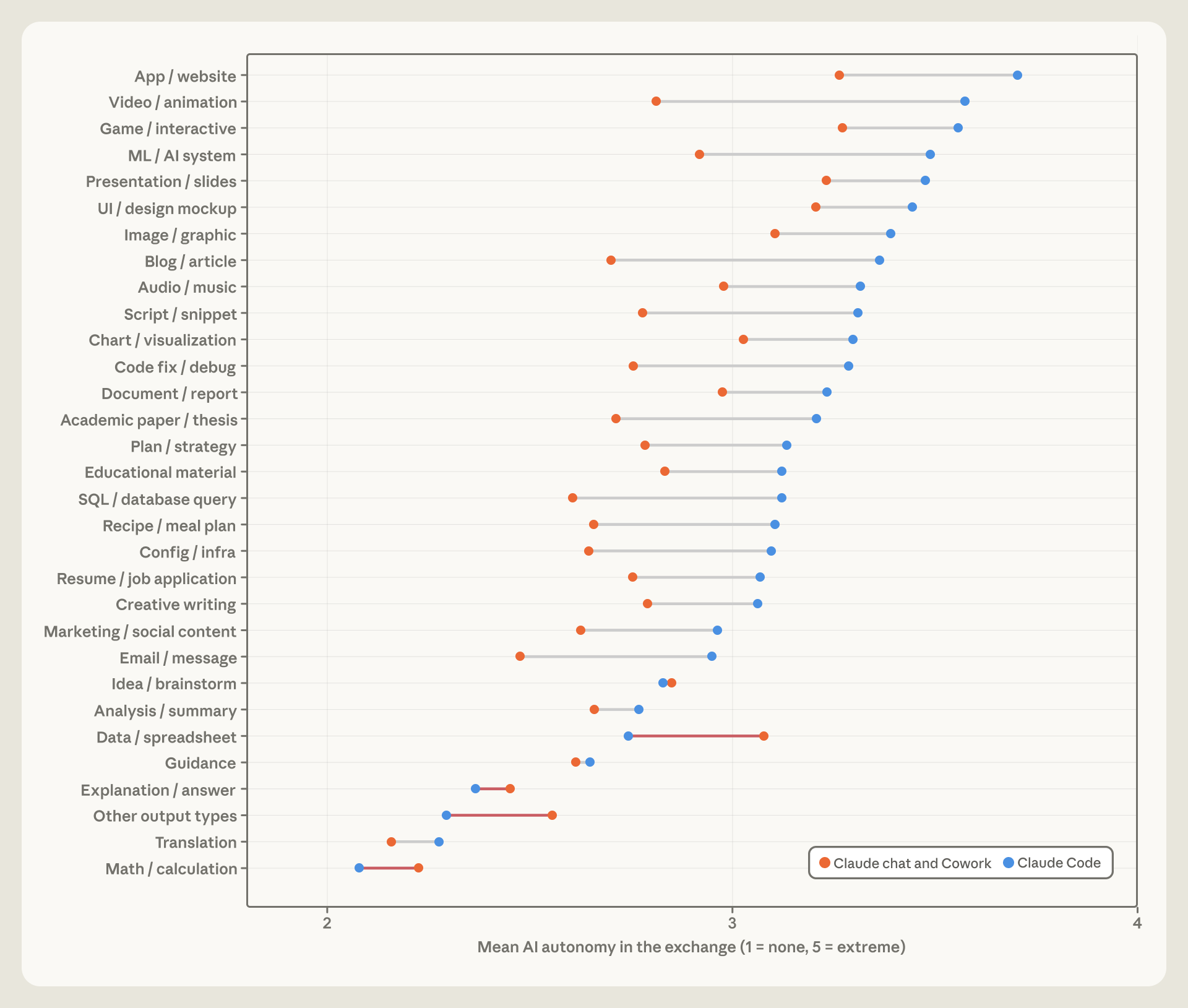
- Claude sessions now often consist of long-running agentic tasks, so this report covers chat, Cowork, and Claude Code sessions from April 10 to June 10, 2026.
- AI autonomy is higher on Claude Code than in chat or Cowork for 26 of 31 types of output.
- The median blog post written in chat or Cowork takes 13 rounds of back-and-forth. The median one written in Claude Code takes a single prompt.
- The report adds a survey of about 9,700 users, linked to their usage, on how AI affects their jobs.
Observed exposure
Labor Market Impacts of AI, March 5, 2026
- A task counts as covered if an LLM could theoretically speed it up and it has enough work-related usage in Claude traffic.
- Automated use gets full weight. Augmentative use gets half weight.
- Task coverage is averaged up to occupations by the share of time spent on each task.
- Claude is far from its theoretical reach. It covers 33% of tasks in Computer and Math occupations, where 94% are theoretically feasible.
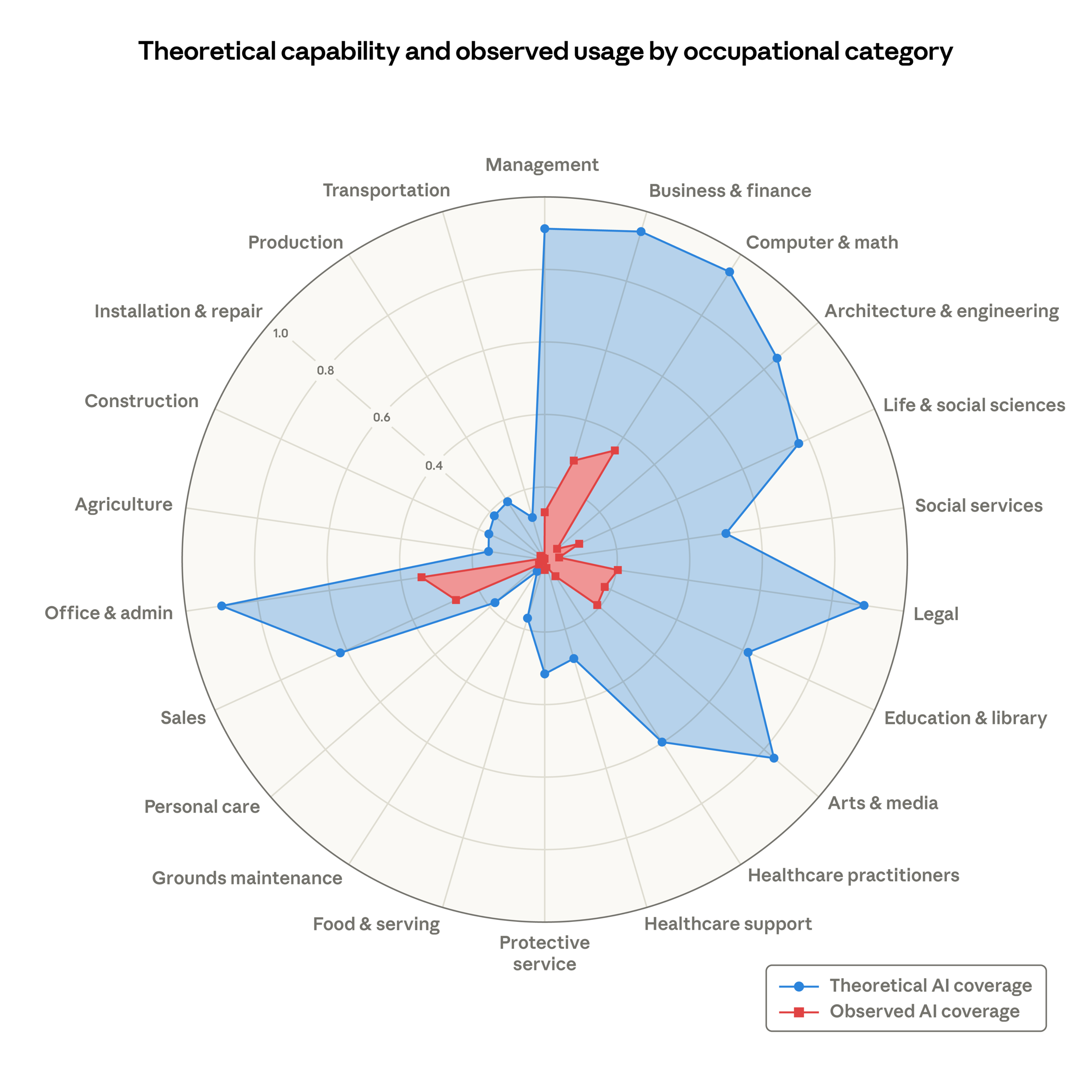
Theoretical capability (blue) against observed usage (red) by occupational category.
Massenkoff and McCrory, Anthropic, 2026
Employment impact: unemployment
Labor Market Impacts of AI, March 5, 2026
- Workers in the most exposed quarter of occupations are compared with workers in unexposed occupations, using the Current Population Survey.
- There is no systematic increase in unemployment for highly exposed workers since late 2022.
- A difference of about 1 percentage point would have been detectable.
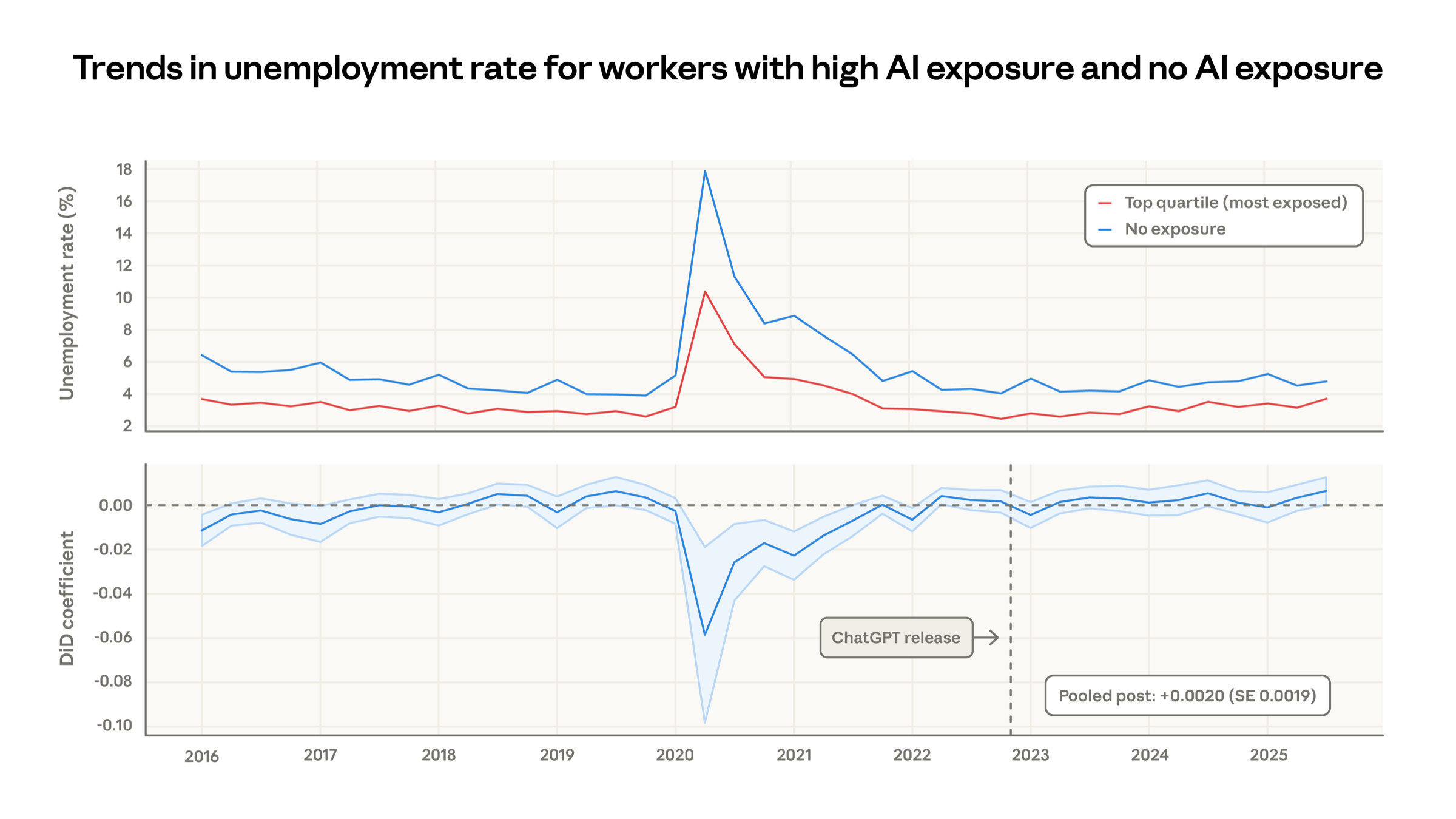
The unemployment gap between the most exposed and unexposed workers has not changed measurably since ChatGPT’s release.
Massenkoff and McCrory, Anthropic, 2026
Employment impact: young workers
Labor Market Impacts of AI, March 5, 2026
- Unemployment for young workers in exposed occupations is flat.
- But the rate at which workers aged 22 to 25 start jobs in exposed occupations fell by about 14% compared with 2022. This is barely statistically significant.
- There is no such drop for workers older than 25.
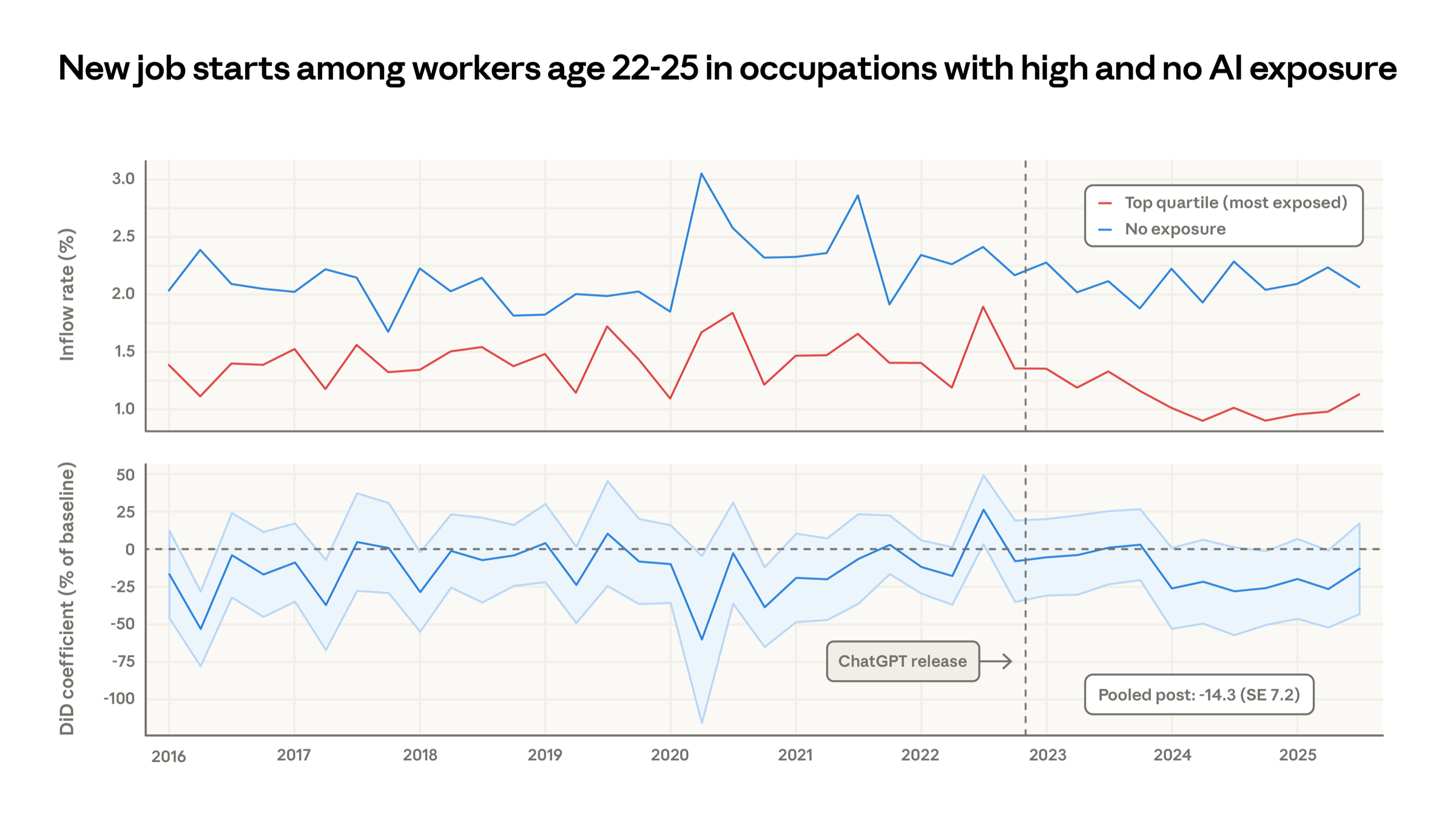
New job starts among workers aged 22 to 25 in occupations with high and no AI exposure.
Massenkoff and McCrory, Anthropic, 2026
Employment impact: how users see their jobs
Economic Index V6, June 26, 2026
- More than a third said their responsibilities would likely change significantly. 10% rated losing their own job as likely or very likely.
- People worried more about job loss for others than for themselves, especially for junior colleagues.
- Users with a higher share of automated sessions were more optimistic about their future pay and ability to find a job.
- The report has no new unemployment data.
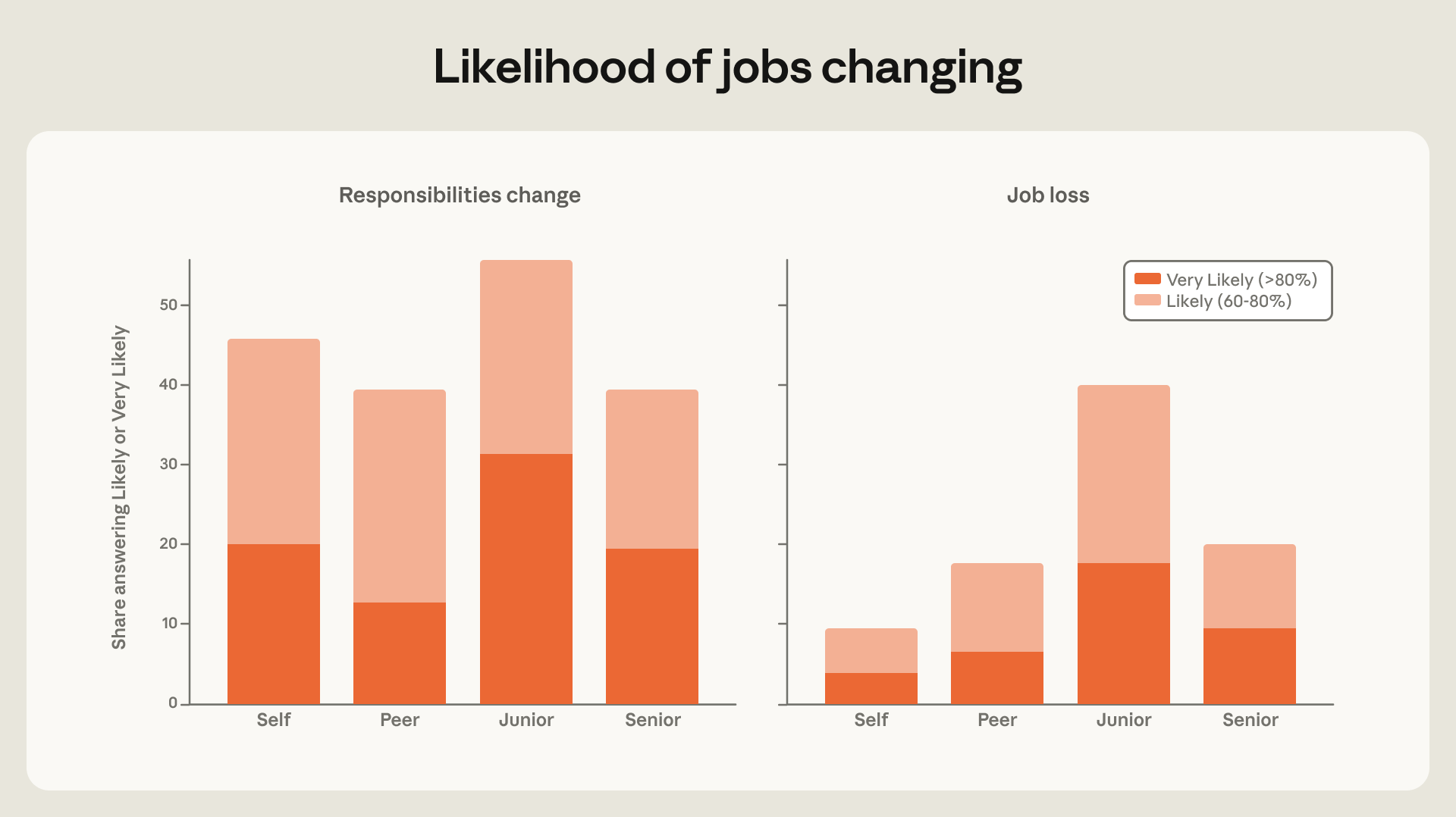
The share of users who rated a big change in responsibilities, or job loss, as likely, for themselves and for colleagues.
Anthropic Economic Index, June 2026
What workers want AI to do: WORKBank
Shao et al., Future of Work with AI Agents, 2025
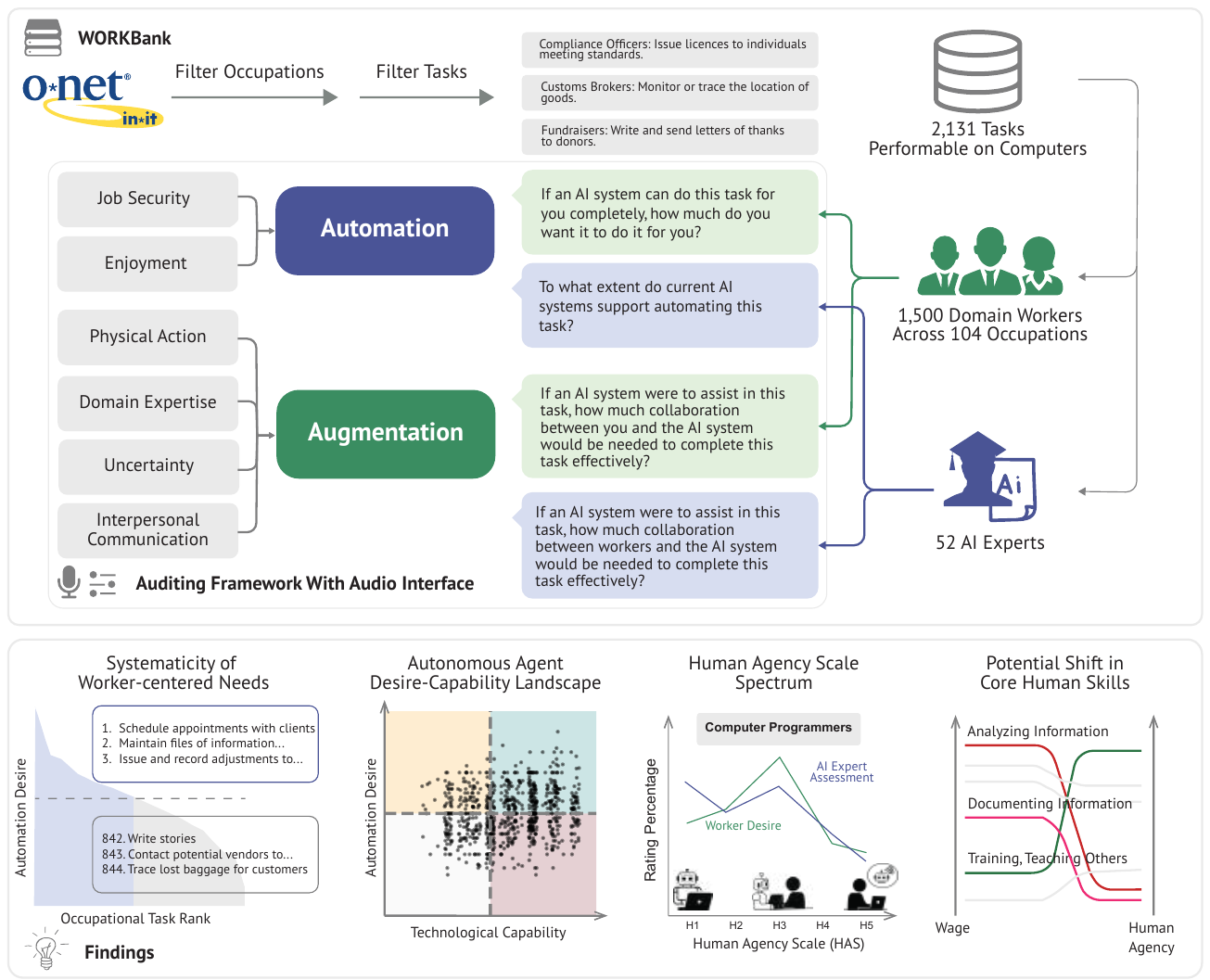
- 2,131 computer-based tasks from O*NET, done at least monthly.
- 1,500 workers in 104 occupations rated 844 tasks they do themselves, after a short spoken interview about their work.
- Workers rated how much they want an AI agent to do each task.
- 52 AI experts rated how well current AI could do each task.
The Human Agency Scale
Shao et al., Future of Work with AI Agents, 2025
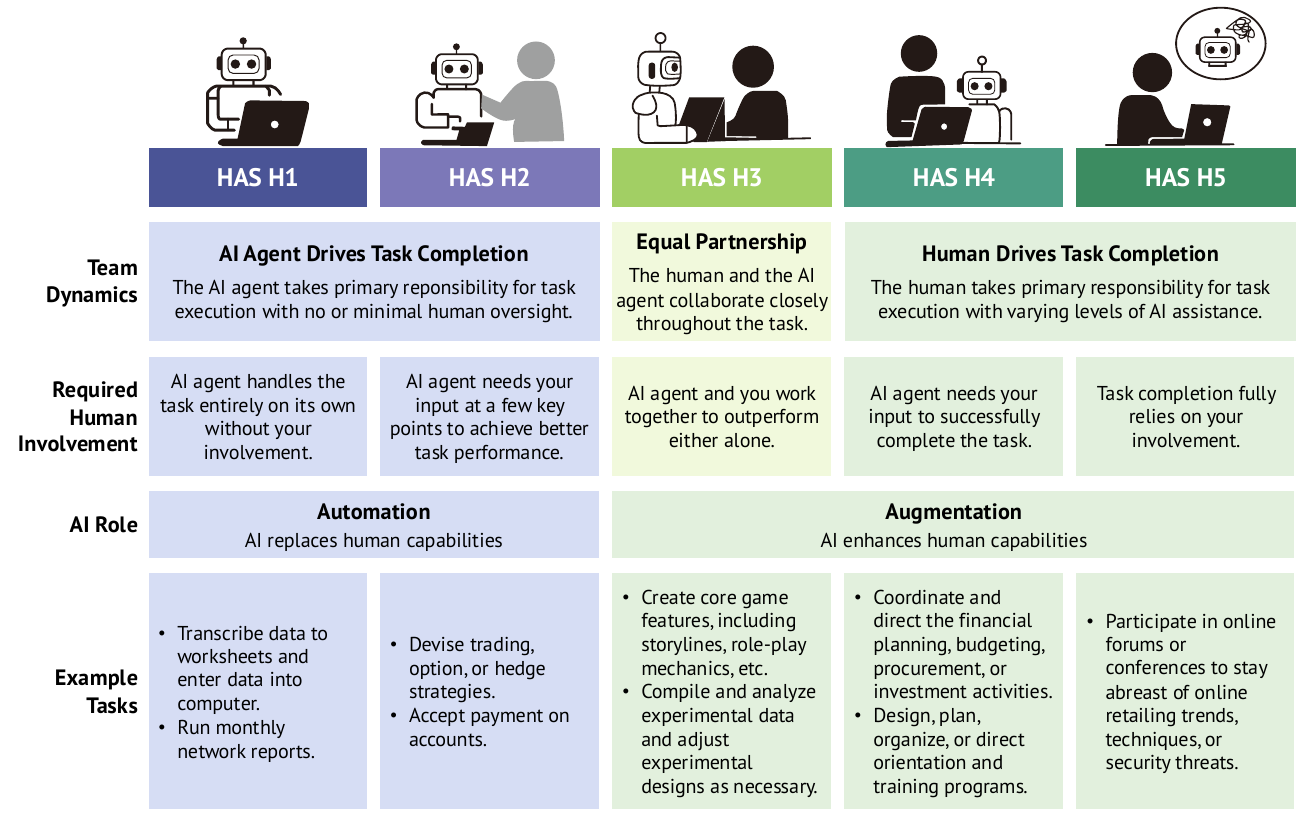
- It measures how much human involvement a task needs, from H1 (the agent does it alone) to H5 (the agent cannot work without continuous human involvement).
- Workers rate the level they want. Experts rate the level current technology needs.
- Each task gets a worker level and an expert level by majority vote.
- A higher level is not better. H1 and H2 favor automation, and H3 to H5 favor augmentation.
Findings: desire and capability
Shao et al., Future of Work with AI Agents, 2025
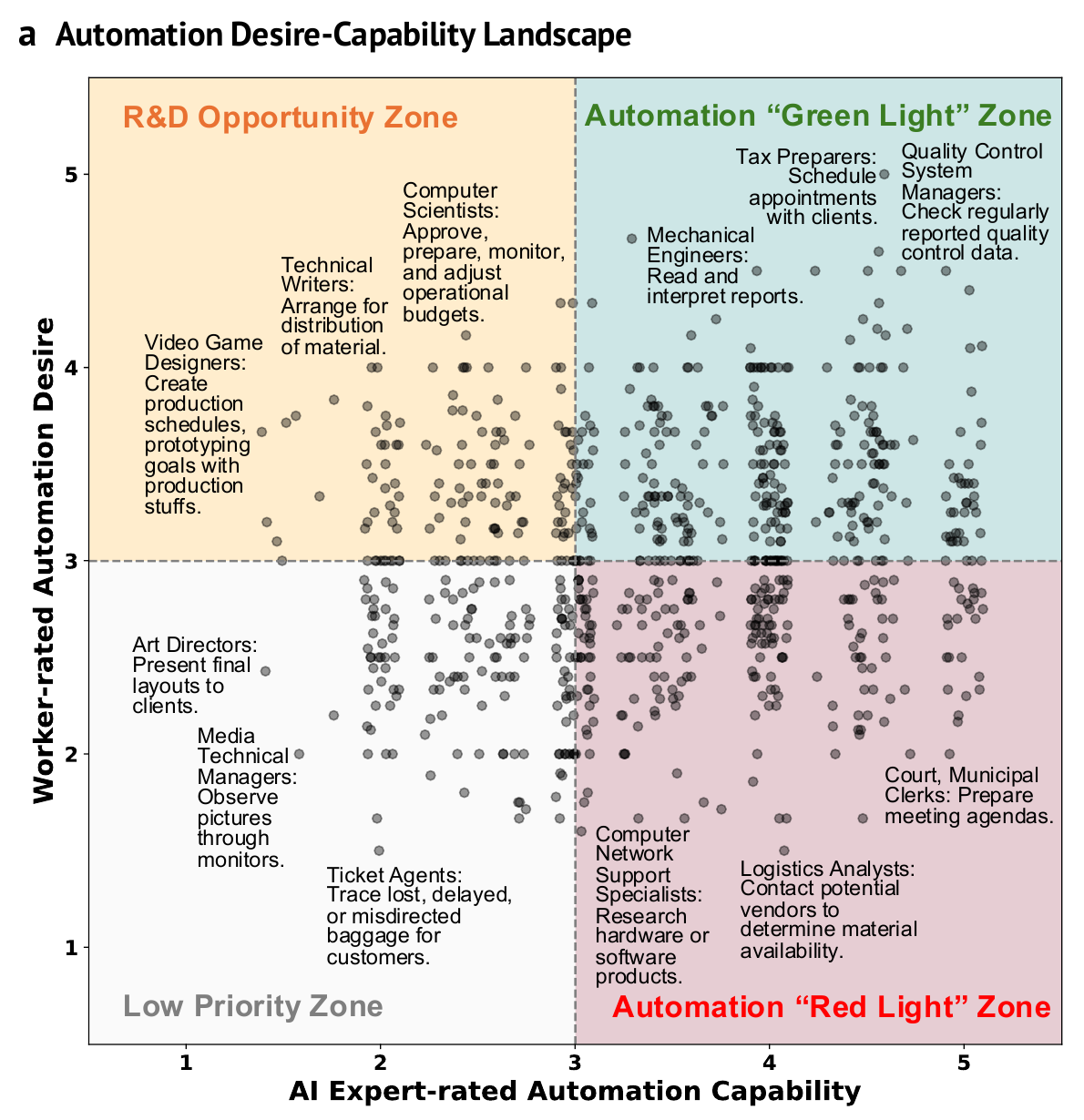
- Workers want AI agents to automate 46.1% of the tasks, even after considering job loss and enjoyment. The most common reason is to free up time for high-value work.
- Desire and capability are only weakly related, which splits tasks into four zones.
- 41.0% of Y Combinator company to task mappings fall in the Low Priority and Red Light zones.
Findings: how much human agency workers want
Shao et al., Future of Work with AI Agents, 2025
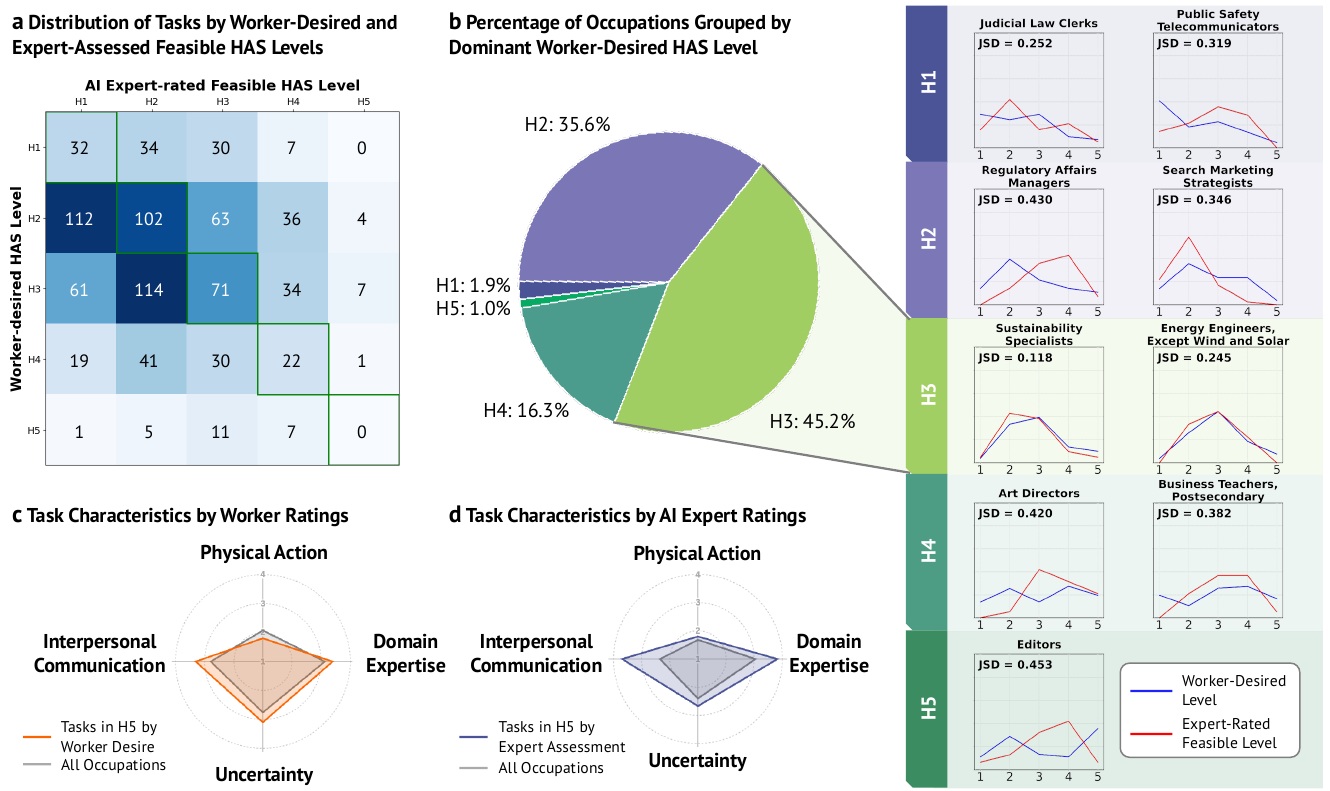
- H3, an equal partnership, is the level most workers want in 45.2% of occupations.
- Workers and experts give the same level for 26.9% of tasks.
- For 47.5% of tasks, workers want more human agency than experts think the technology needs.
Findings: which skills matter
Shao et al., Future of Work with AI Agents, 2025
- Information-processing skills, such as analyzing information, are common in today’s high-wage jobs but less prominent in tasks that need high human agency.
- Interpersonal and organizational skills are more often tied to tasks that need high human agency.
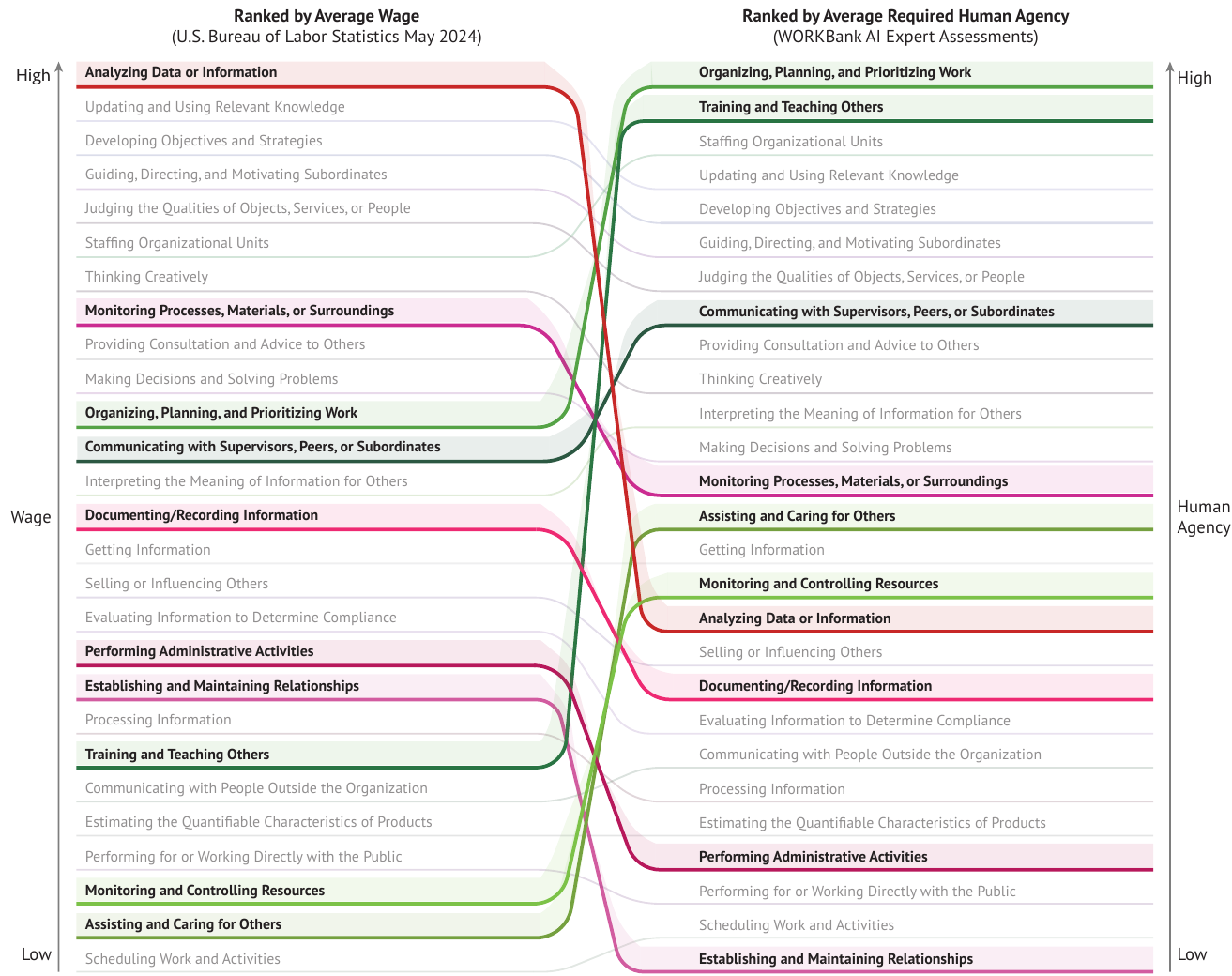
Skills ranked by average wage (left) and by the human agency their tasks require (right).
Shao et al., Future of Work with AI Agents, 2025
A sequel to WORKBank: where it matches
Human-AI Collaboration at Scale: Task Criticality, Agency, and Friction across 250,000 Conversations
- The same research group applied WORKBank’s Human Agency Scale to about 250,000 real Claude.ai conversations from April and May 2026.
- 72% of conversations are H4: the human leads and the AI assists. Only 18.2% are H1 or H2, where the AI acts on its own or with minimal input.
- This lines up with WORKBank, where workers wanted more human agency than experts thought the technology needed.
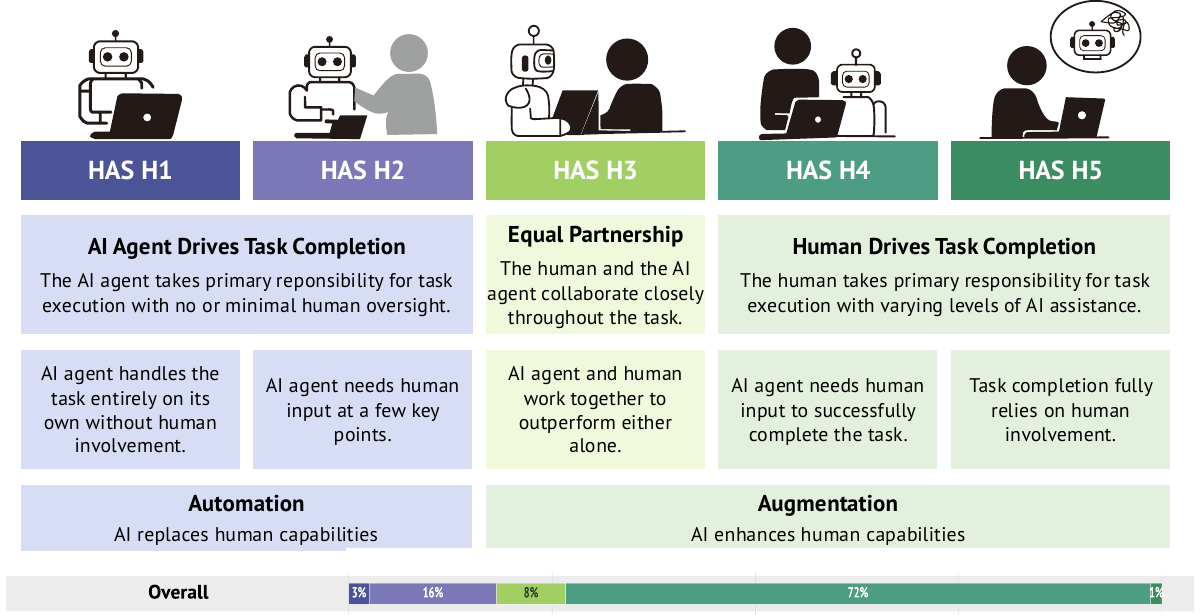
The Human Agency Scale from WORKBank, with the share of conversations at each level.
Shao, Zhao, Padmakumar, Wang and Yang, 2026
Survey data: how many workers use generative AI
Bick, Blandin and Deming, The Rapid Adoption of Generative AI
- A national online survey of U.S. adults aged 18 to 64, weighted to match the Current Population Survey. The 2024 waves had about 5,000 responses each.
- It asks “Do you use Generative AI for your job?” with the wording of the government’s own computer use survey.
- In late 2024, 27% of employed respondents had used generative AI for work in the previous week.
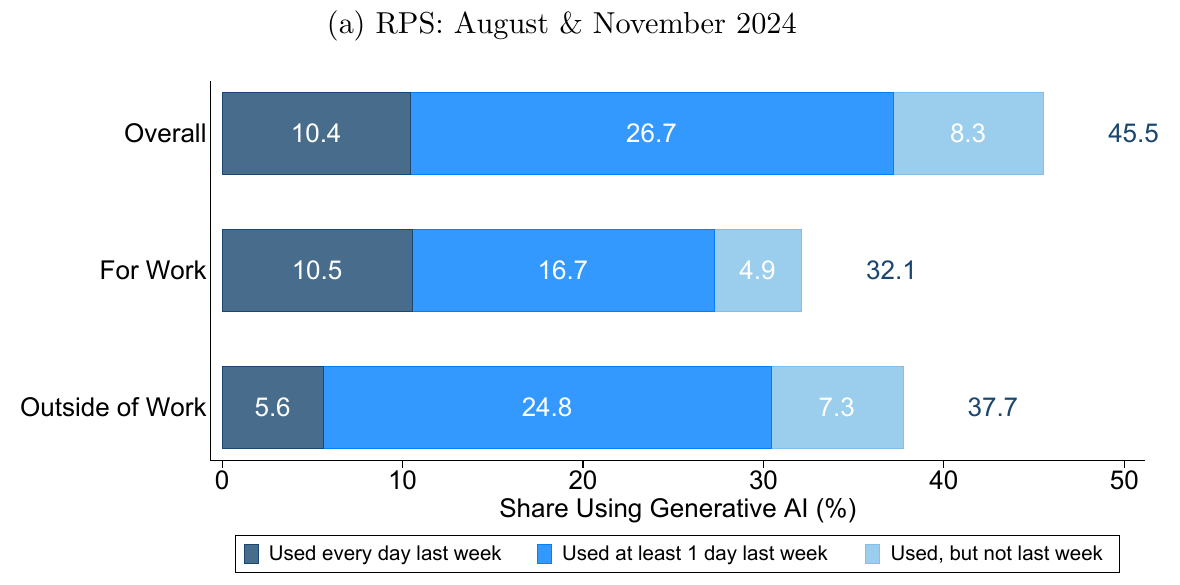
The share of U.S. adults using generative AI overall, for work, and outside of work, in August and November 2024.
Bick, Blandin and Deming, Federal Reserve Bank of St. Louis, 2025
Payroll data: Canaries in the Coal Mine
Brynjolfsson, Chandar and Chen, revised August 2026
- ADP processes payroll for firms with over 26 million U.S. workers. The study follows 3.5 to 5 million employees a month from January 2021 to June 2026.
- Job titles are matched to occupations, and each occupation gets an exposure score from the OpenAI study and the Anthropic Economic Index.
- Employment of workers aged 22 to 25 in AI-exposed occupations is 19% below where it would be if it had kept pace with less-exposed peers. Experienced workers show no such gap.
- The gap comes mainly from less hiring, and it appears where AI substitutes for work rather than complements it.
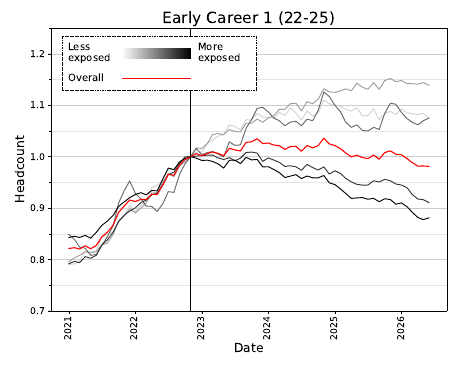
Headcount of workers aged 22 to 25, from less exposed (light) to more exposed (dark) occupations, relative to November 2022.
Brynjolfsson, Chandar and Chen, Stanford Digital Economy Lab, 2026
Occupational relevance vs. actual professional use
The AI Observatory
- The AI Observatory (NeurIPS 2026) uses the Anthropic Economic Index as a methodological comparison and a demonstration of its limitations.
- It applies Anthropic’s occupational classification to its own conversation data to show what conventional economic-use analyses leave out.
- 47.9% of conversations are filtered out. The original occupational scope is too narrow to represent the full spectrum of real-world AI use.
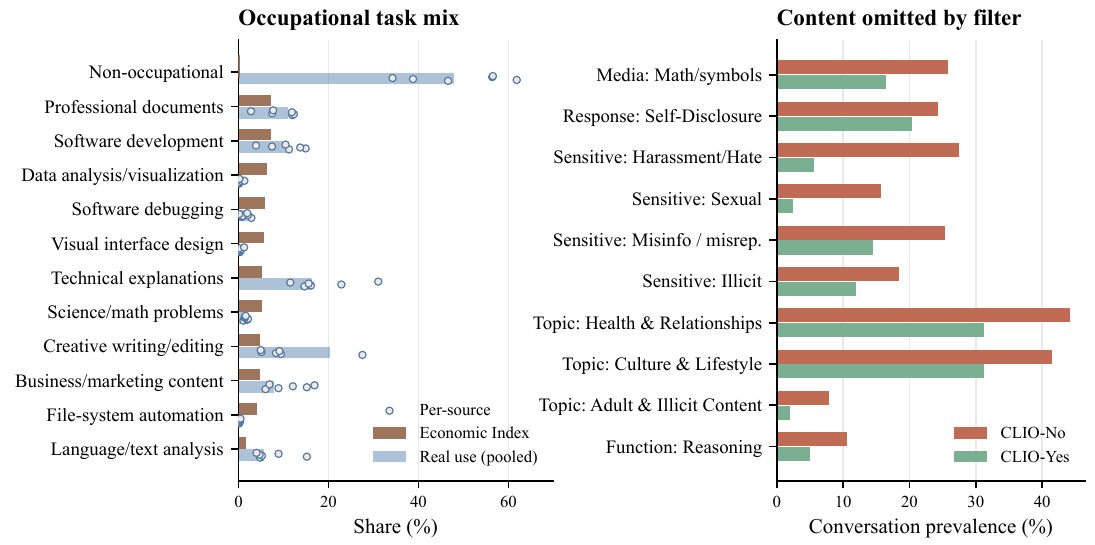
Left: the occupational task mix, with nearly half of real-world conversations classed as non-occupational. Right: what the filter removes.
Longpre, Reuel, Ki et al., The AI Observatory, 2026
What’s left out
The AI Observatory
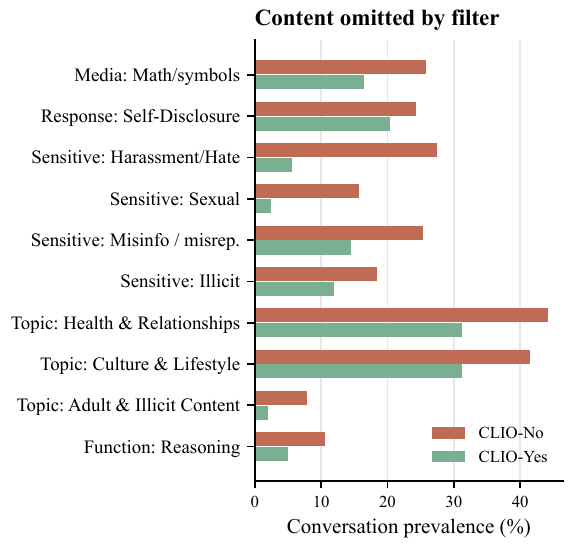
Personal, social, cultural, and safety-relevant AI interactions:
- Interpersonal relationships and communication: dating advice, navigating friendships, family disagreements, composing personal apologies.
- Health and medicine: discussing symptoms, emotional well-being, personal health decisions.
- Lifestyle: developing routines, personal habits, everyday decisions.
- Culture: discussing social norms, cultural traditions, identities.
- Sexual, harassment and hate, illicit, misinformation and misrepresentation: sex-related questions, hateful or harassing exchanges, potentially misleading claims, illicit topics.
Confidentiality between the company and the AI provider
Human control issues
- Zero data retention (ZDR): the provider does not store prompts or responses after the response is returned.
- The emerging conflict: Anthropic keeps inputs and outputs for 30 days for its most capable models (Mythos-class, and Fable 5, 5.1 and 5.2), including for customers with zero-retention agreements.
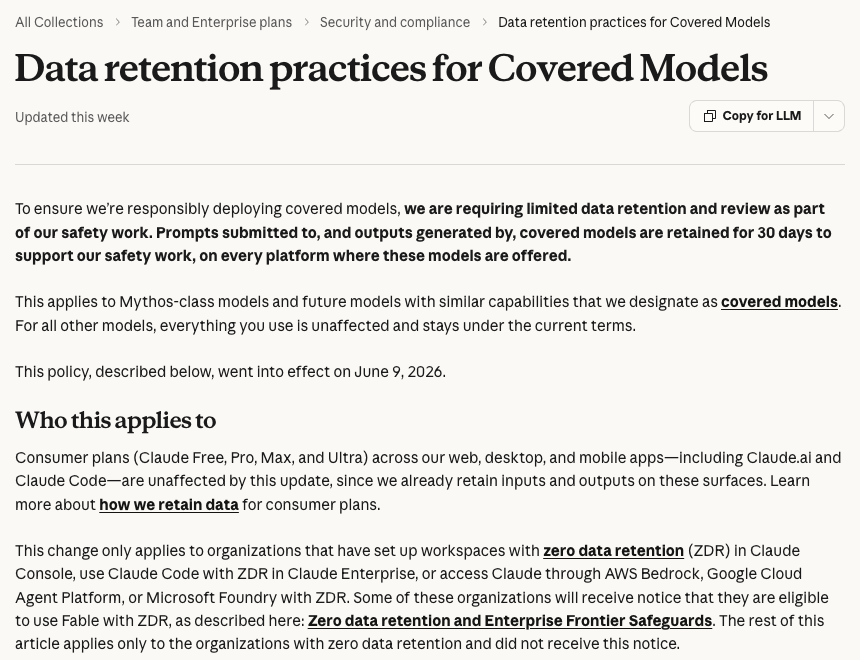
The policy took effect on June 9, 2026.
Anthropic Help Center, Data retention practices for Covered Models
Confidentiality between the principal and other people
Salesforce’s CRMArena-Pro benchmark, May 2025
- Agents work in a simulated Salesforce organization on customer sales, service, and pricing tasks, talking with a simulated user.
- Some requests ask for information the agent should not share, such as another customer’s order or internal company data.
- With a standard prompt, agents almost never refused. A prompt that asked for confidentiality raised refusals but lowered task completion.
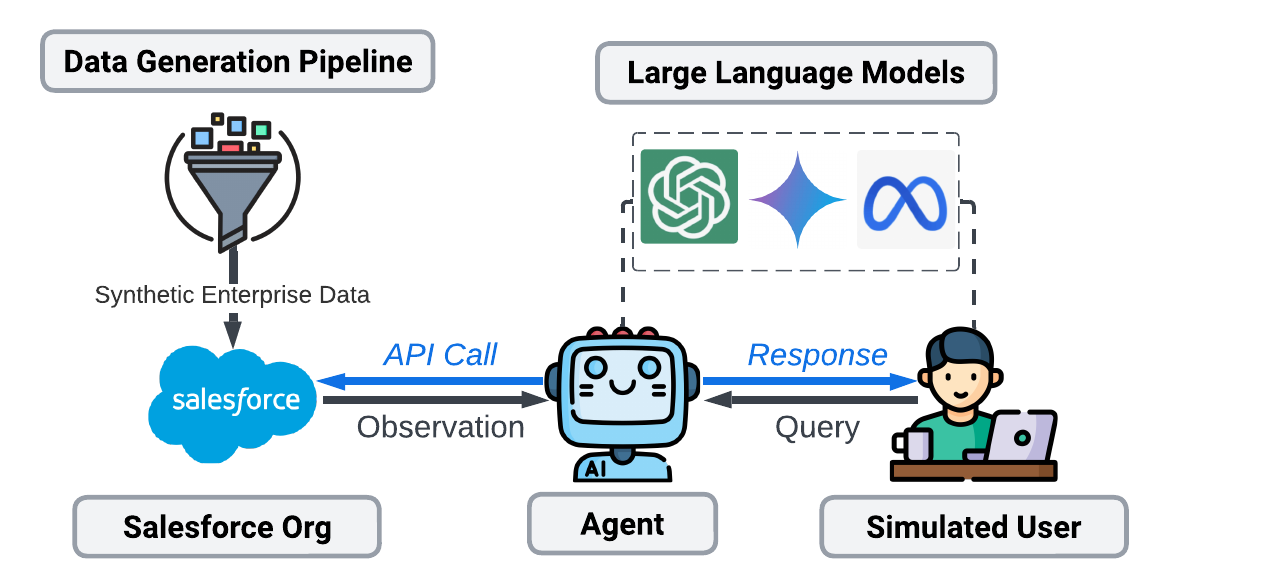
The agent calls the Salesforce organization’s API and responds to a simulated user.
Huang et al., CRMArena-Pro, 2025
Identity and authority: on whose behalf does the agent act?
Human control issues
- Microsoft’s Entra Agent ID gives every agent its own identity, a human sponsor, access rules and sign-in logs.
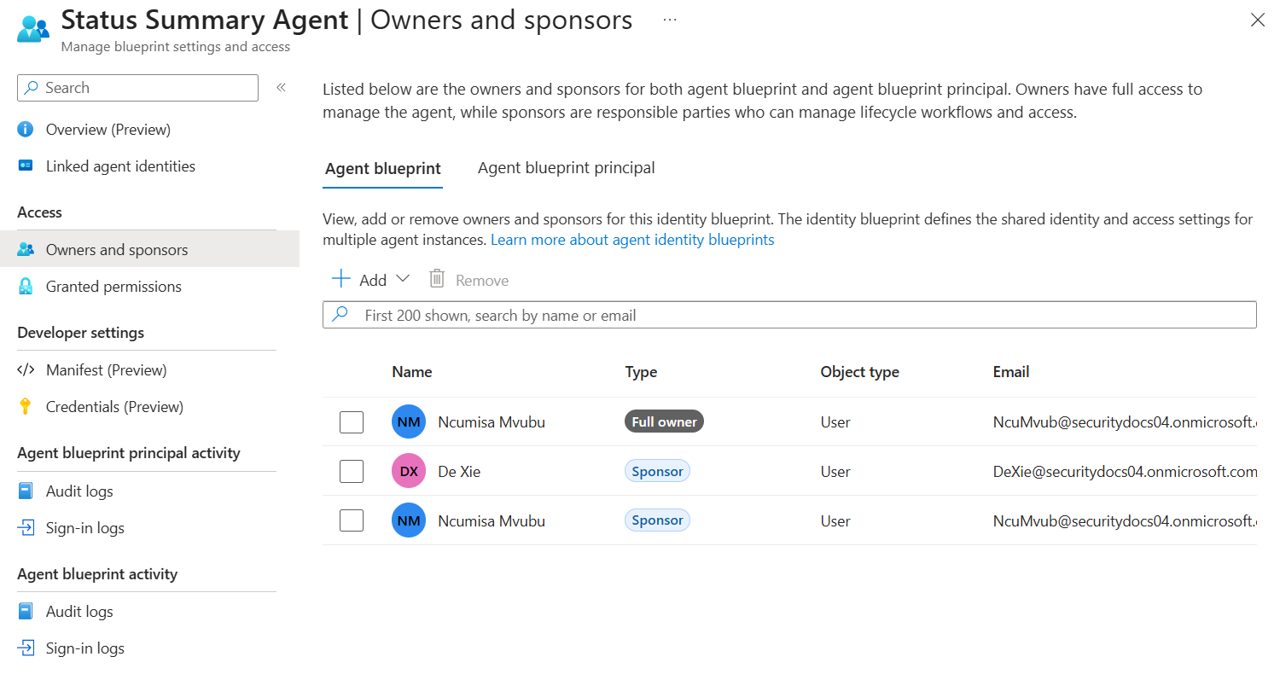
An agent’s owners and sponsors in the Microsoft Entra admin center, with its audit and sign-in logs in the menu.
Microsoft Learn, Microsoft Entra Agent ID
Identity and authority: on whose behalf does the agent act?
NIST concept paper, February 2026
NIST’s February 2026 concept paper on agent identity and authorization asks for exactly these properties:
- each agent can be identified
- each agent is allowed to do only specific things
- its actions are logged
- those actions cannot later be denied
- each agent is linked to the person who delegated to it
Representation and disclosure
Hohenstein et al., Scientific Reports, 2023
- AI-suggested “smart replies” made conversations faster and more positive.
- But people judged their partner more negatively when they suspected AI was writing, whether or not it was.
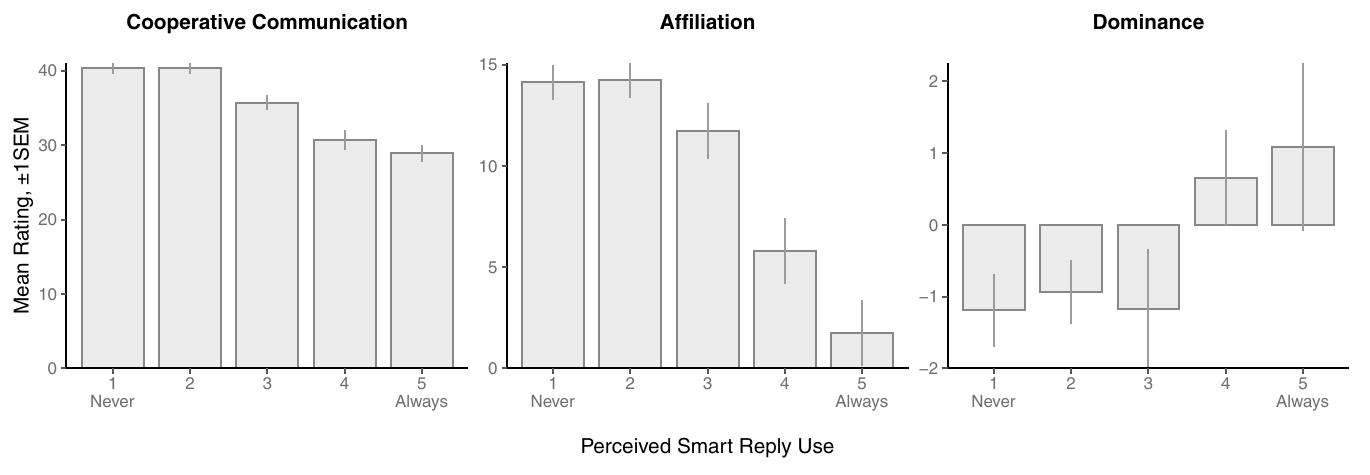
The more people thought their partner used smart replies, the less cooperative and affiliative they rated them.
Hohenstein et al., Scientific Reports, 2023
Representation and disclosure: workslop
BetterUp Labs and Stanford Social Media Lab, 2025
- A 2025 survey of 1,150 US desk workers found 40% had received “workslop” in the past month, meaning AI-generated work that looks fine but lacks substance.
- Each instance took about two hours to deal with.
- 42% saw the sender as less trustworthy.
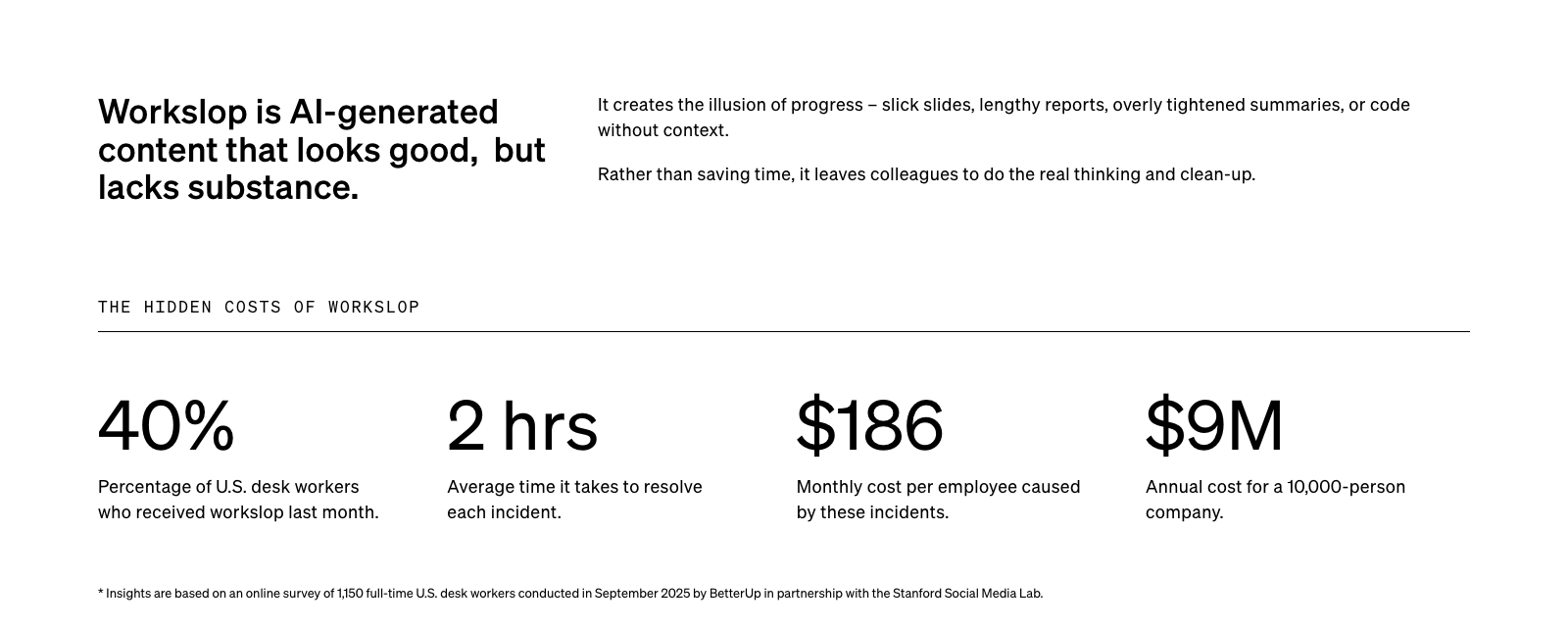
BetterUp Labs, The hidden costs of workslop, 2025
Ten years ago: anonymous crowdworkers doing small tasks
Today’s data work has changed substantially from ten years ago
- Hara et al. (CHI 2018) tracked 2,676 Amazon Mechanical Turk workers doing 3.8 million tasks from 2014 to 2017.
- Their median hourly wage was $1.77.
- Much of their time went to unpaid work, like searching for tasks or doing work that was then rejected.
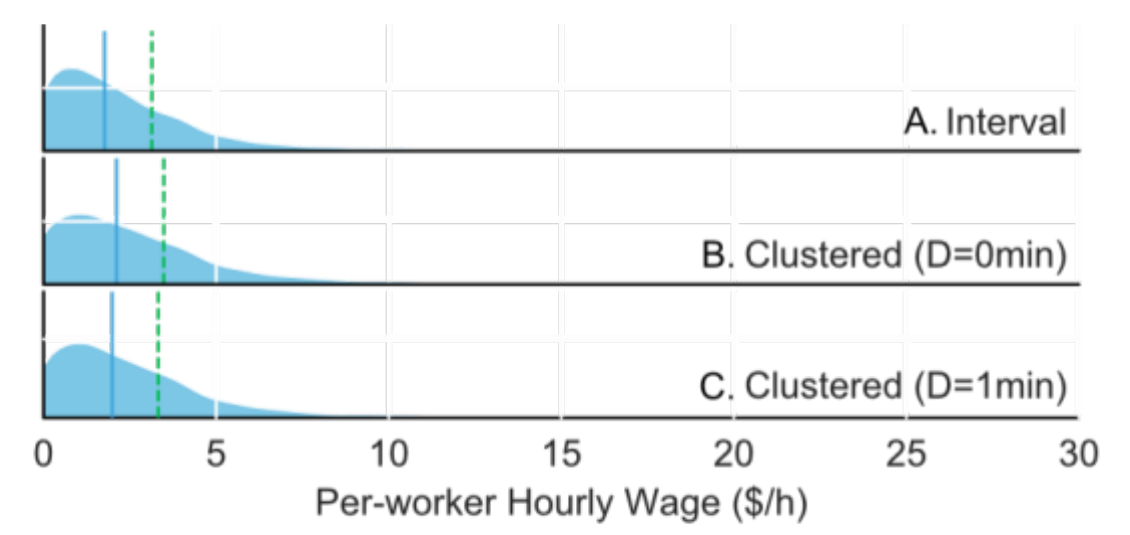
Most workers earned under $5 an hour. Blue lines mark medians and green dashed lines mark means.
Hara et al., CHI 2018
Now: experts who design tasks, write rubrics and show how the work is done
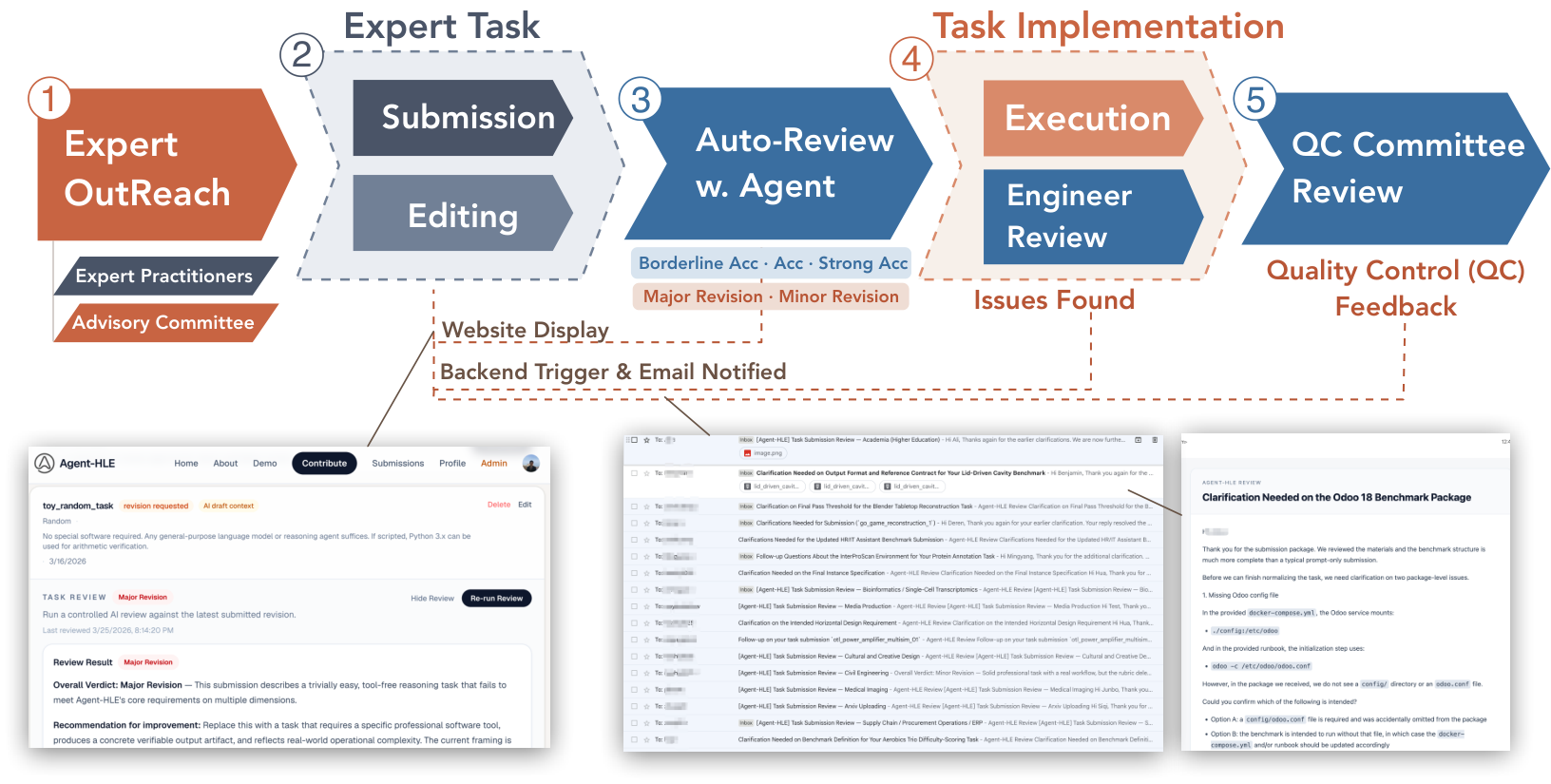
In Agents’ Last Exam, experts submit real tasks from their own work, with input files, the expected deliverable, and how it should be graded.
Sun et al., Agents’ Last Exam, UC Berkeley RDI, 2026
OpenAI’s “Project Mercury”
Now: experts who design tasks, write rubrics and show how the work is done
- OpenAI’s “Project Mercury” hired over 100 former investment bankers at about $150 an hour to build financial models.
- The stated aim is to automate the routine work of junior bankers.
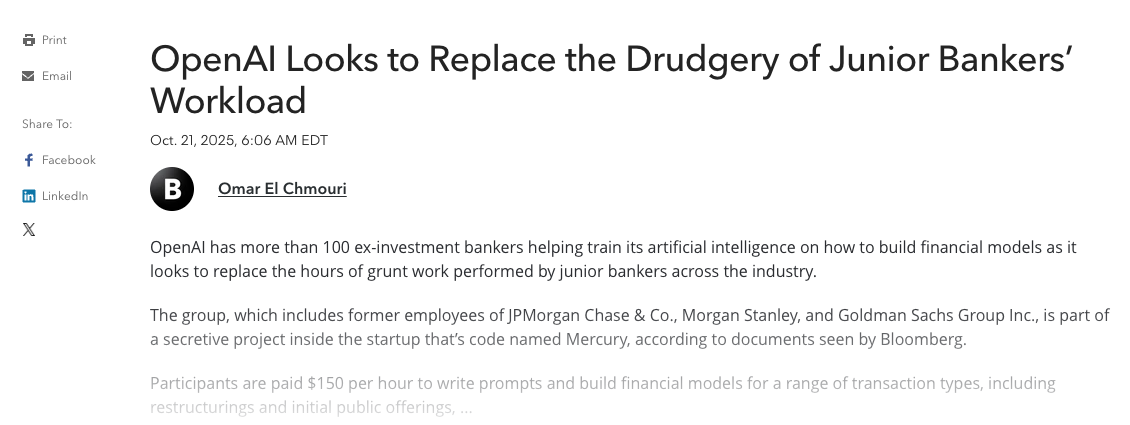
Bloomberg, October 21, 2025
xAI moves from generalist to specialist tutors
Now: experts who design tasks, write rubrics and show how the work is done
- xAI cut at least 500 generalist annotators in September 2025.
- It announced it would expand its specialist tutor team tenfold, in STEM, coding, finance, law and media.
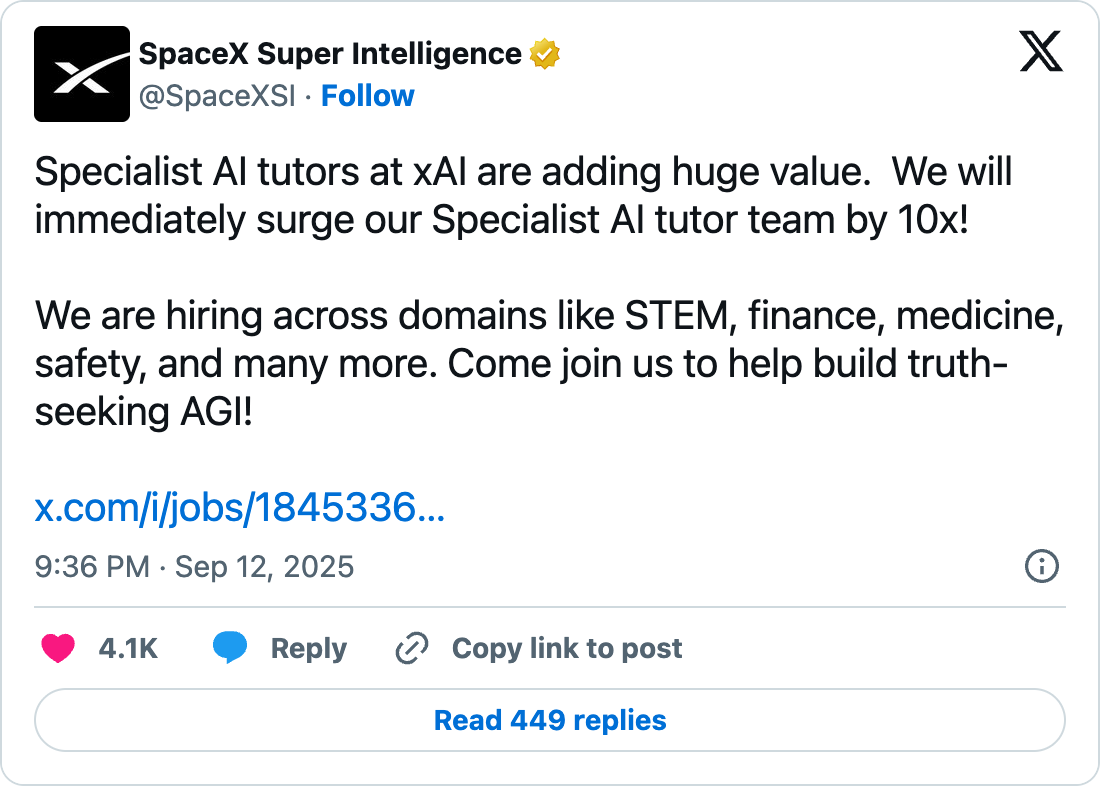
xAI on X, September 12, 2025
New jobs like “AI Trainer” that require domain expertise

Expertise is checked through an assessment, and some projects add evaluations or portfolio reviews.
Handshake AI job posting, November 2026
New jobs like “AI Trainer” that require domain expertise
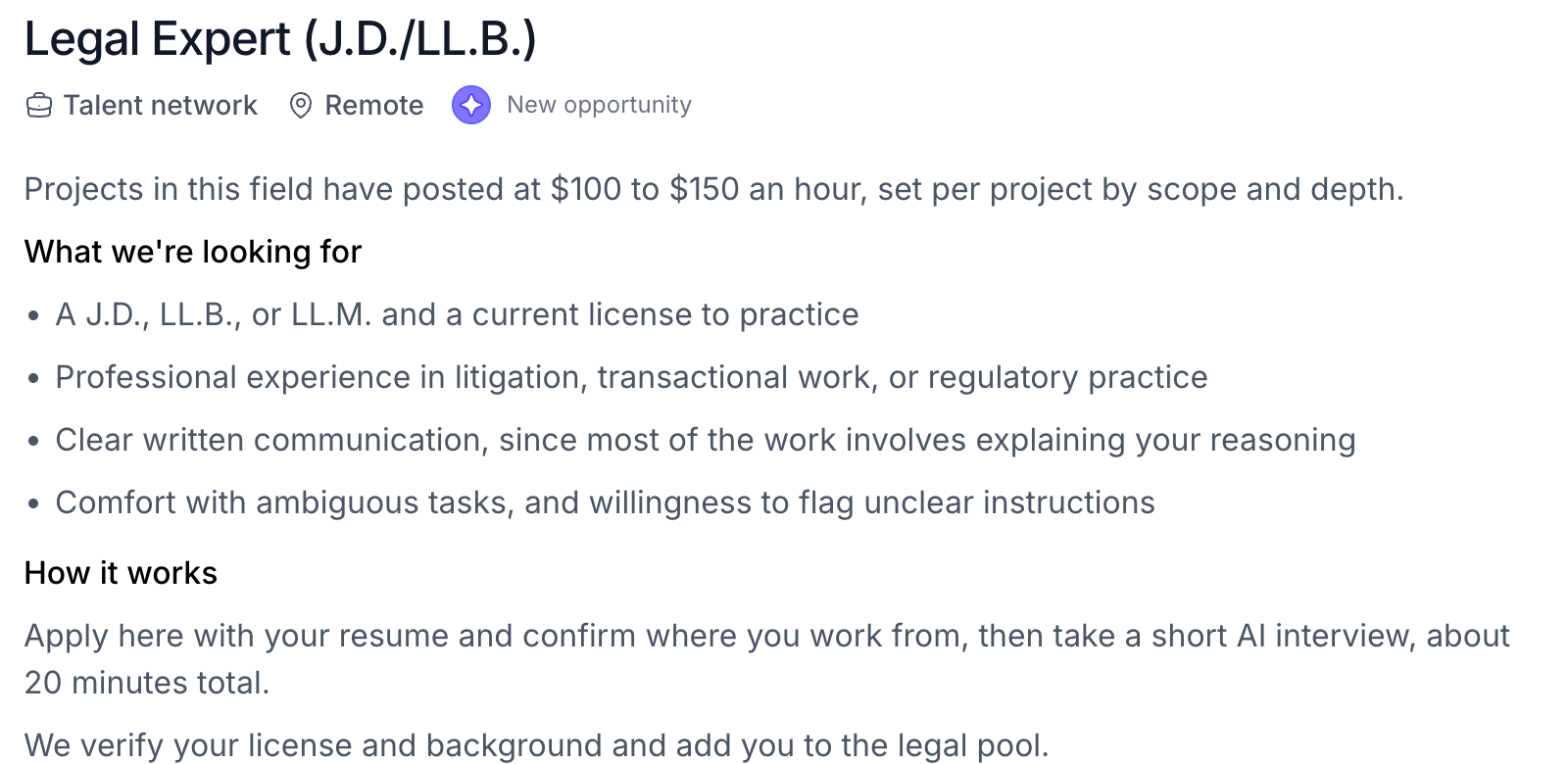
Mercor checks expertise with a 20-minute AI interview and a license and background check.
Mercor talent network listing, November 2026
Attribution is hard: Data Shapley
Ghorbani and Zou, ICML 2019
- A data point’s value depends on the training algorithm and on all the other data, so there is no fixed value per contribution.
- At today’s scale of model, this is very difficult to compute. Each marginal contribution needs a model retrained on a different subset.
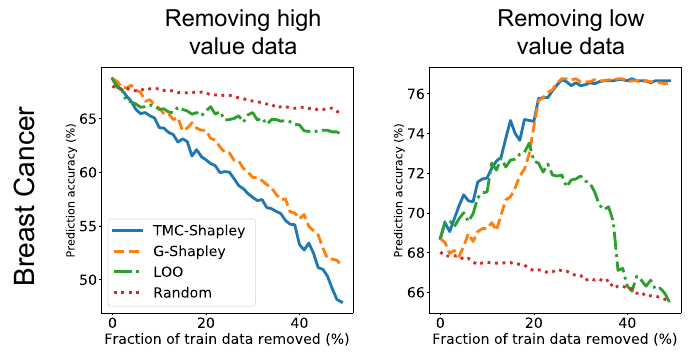
Removing high-value points hurts accuracy faster than removing random points, and removing low-value points improves it.
Ghorbani and Zou, ICML 2019
How can individuals adapt to the trend of AI work automation?
Summary
- Messy Jobs argues that the future of work depends on “the messy parts of jobs that machines struggle to master: judgment, coordination, accountability, tacit knowledge, and human relationships.”
- Combine analytical skill with people skills.
- Use AI for augmentation, including to help you learn.
Garicano, Li and Wu, Messy Jobs, 2026
How to access O*NET
Studio
- O*NET is free and needs no account. Use the website, O*NET OnLine: onetonline.org
- Find an occupation:
- Type a job title or a task keyword into the search box at the top of the page (for example, “tax”). Results list occupations with their O*NET codes, such as 13-2082.00 Tax Preparers.
- Click an occupation to open its summary page, for example onetonline.org/link/summary/13-2082.00
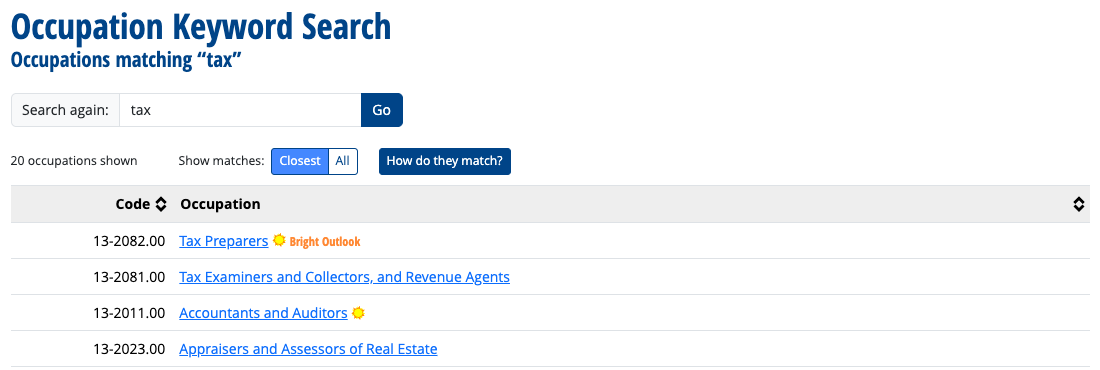
O*NET OnLine, search results for “tax”